
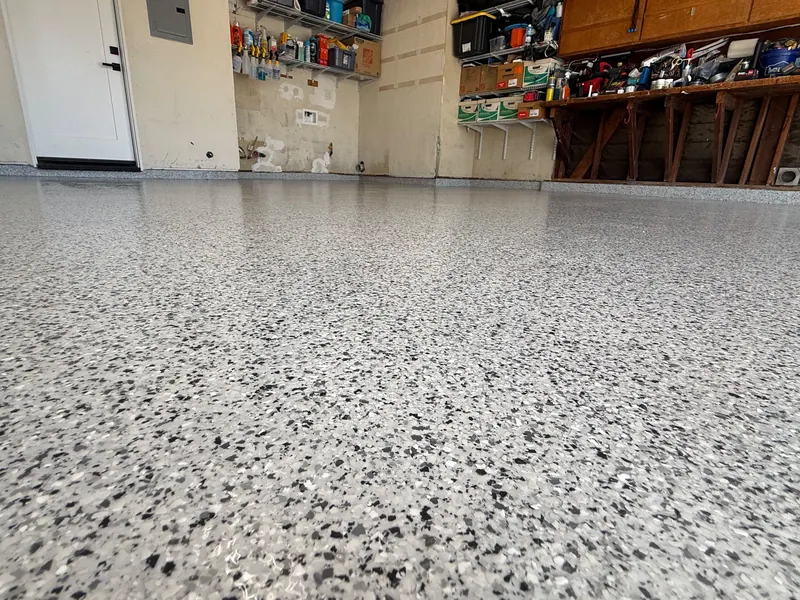
 Forgiving
Hides an imperfect slab
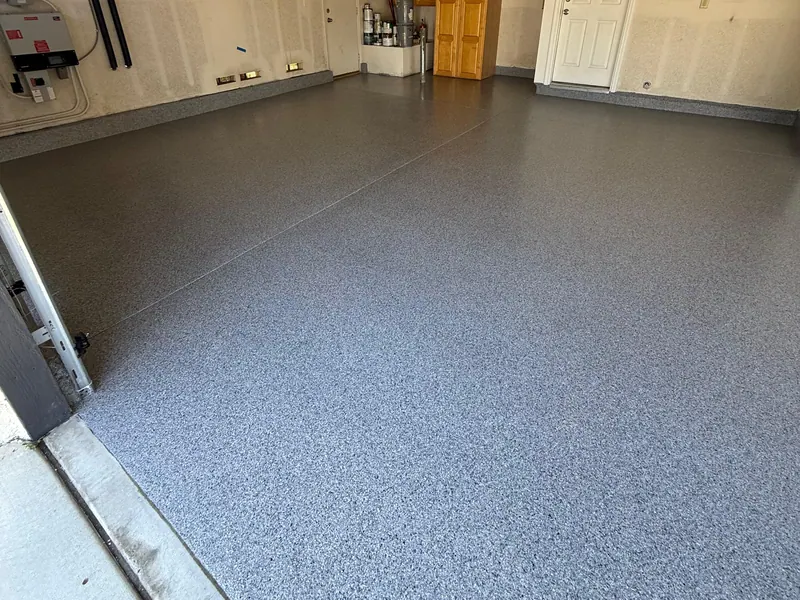
The chips cover repaired cracks, patches and color changes in the concrete that would show through a solid coat.
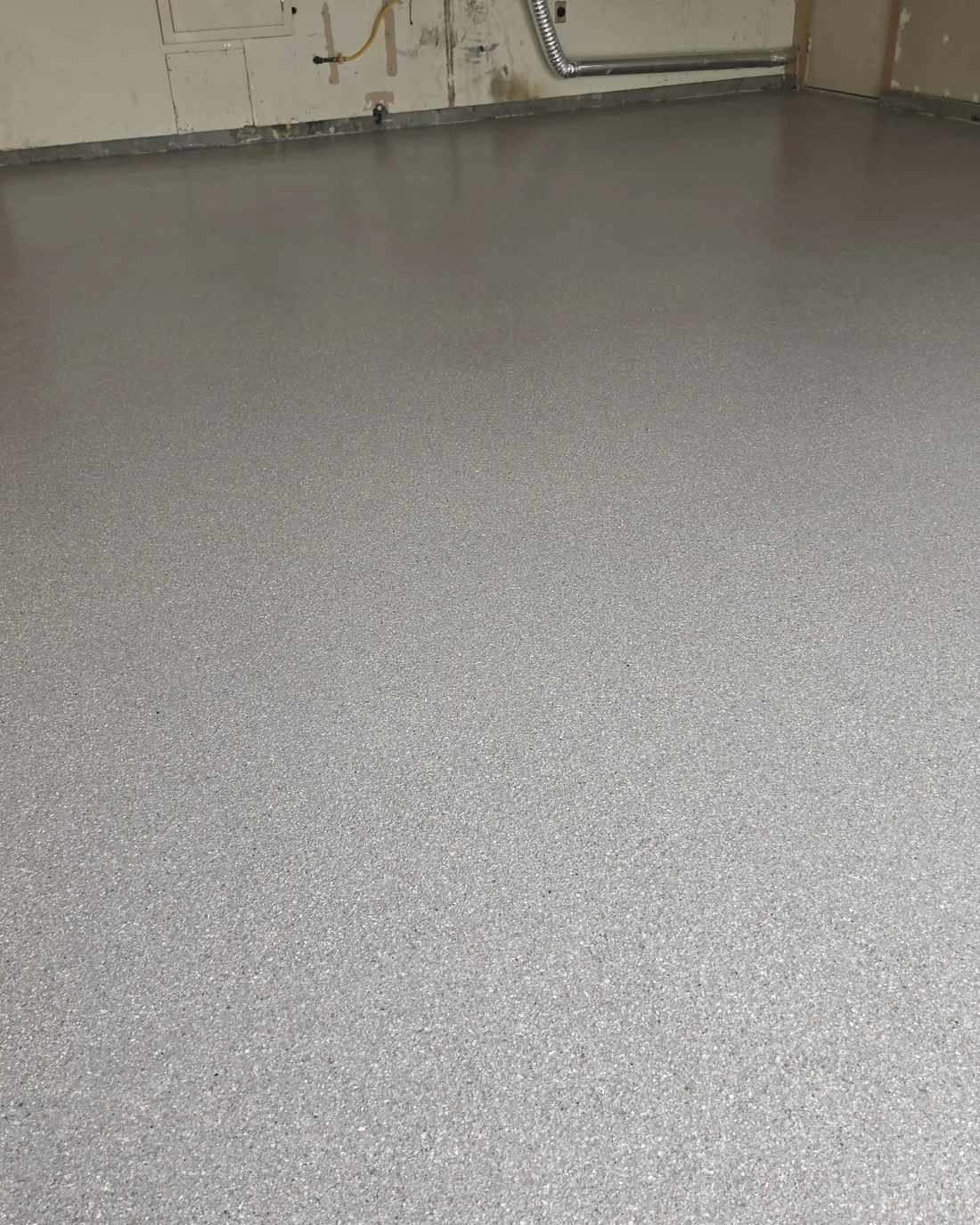
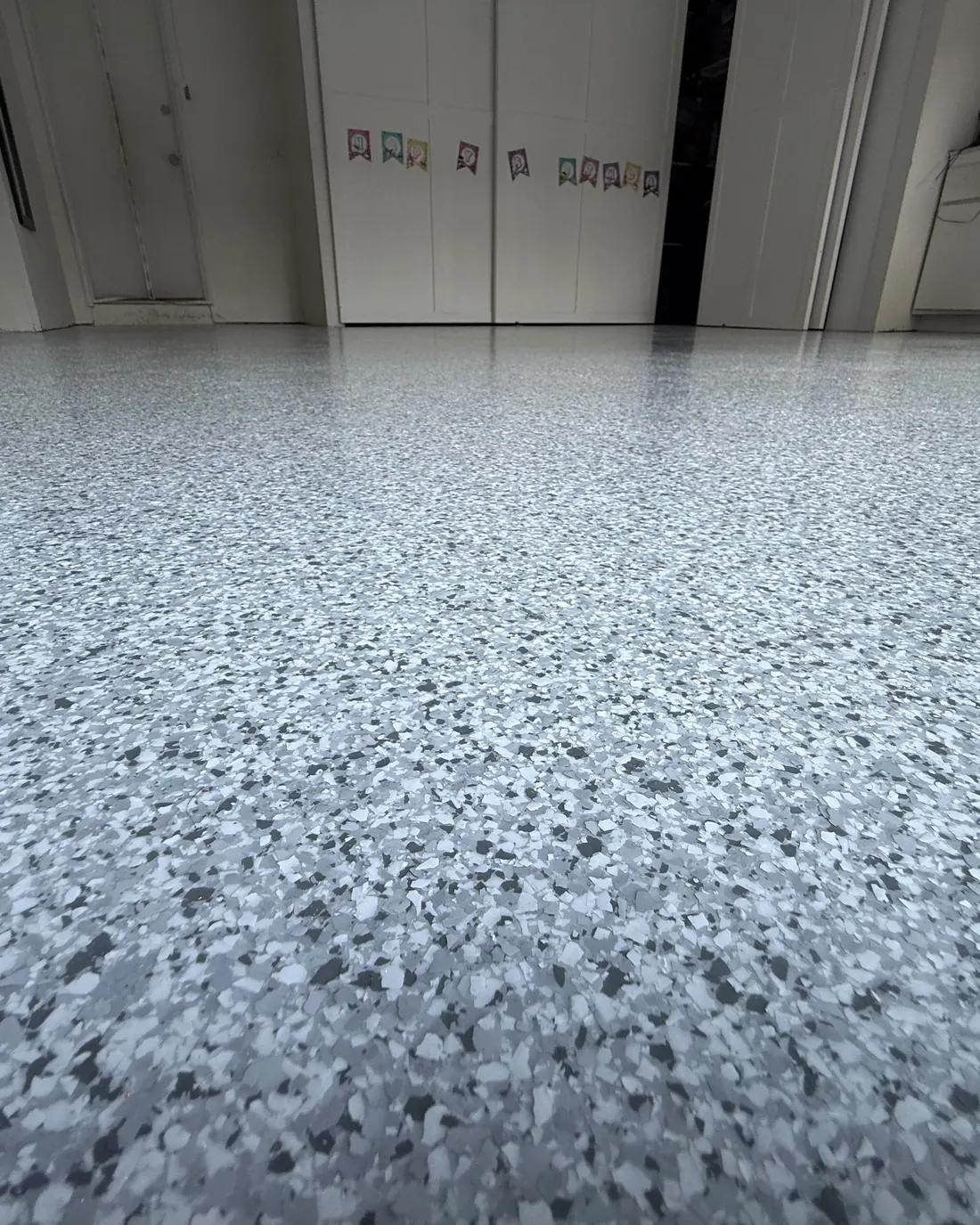
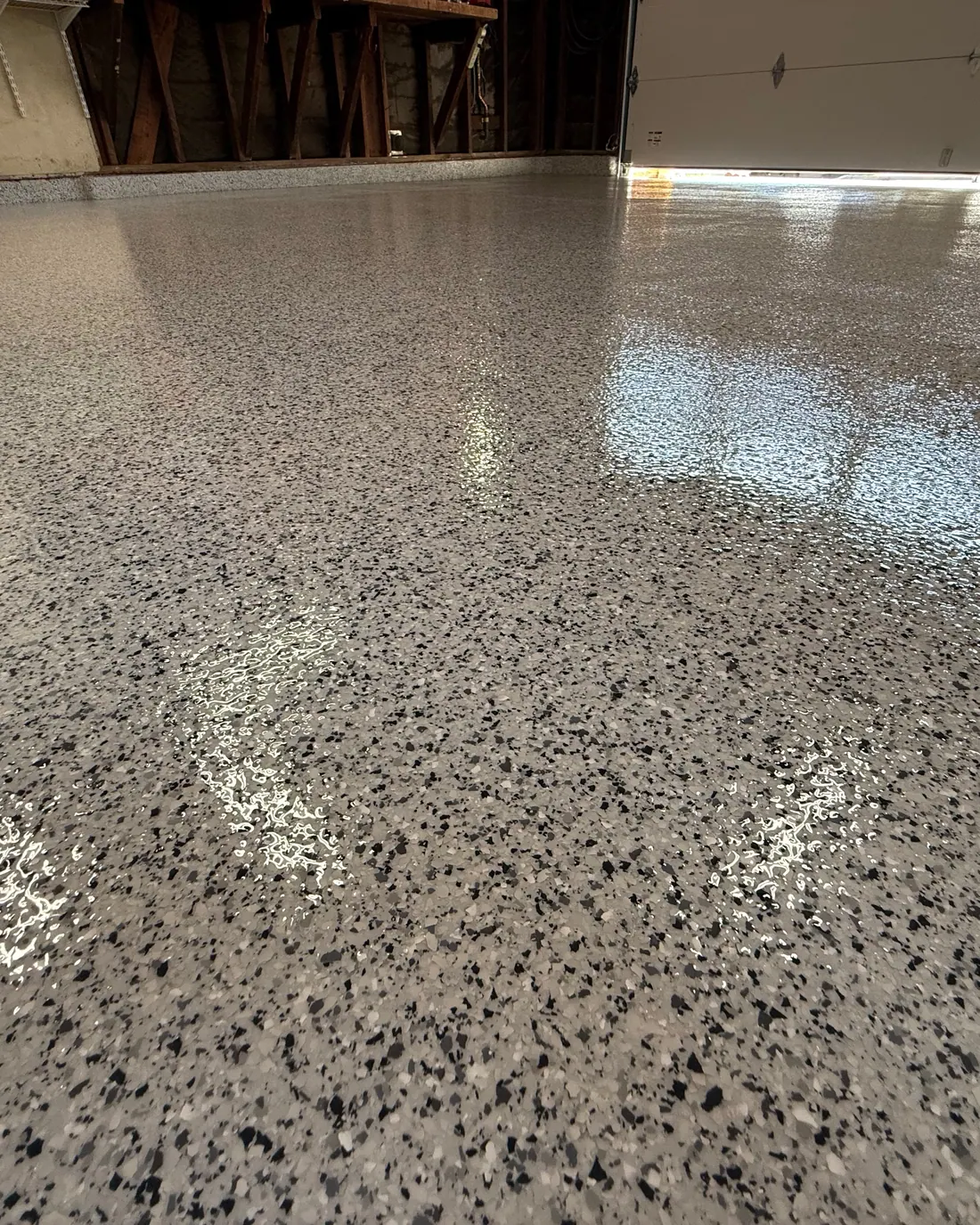
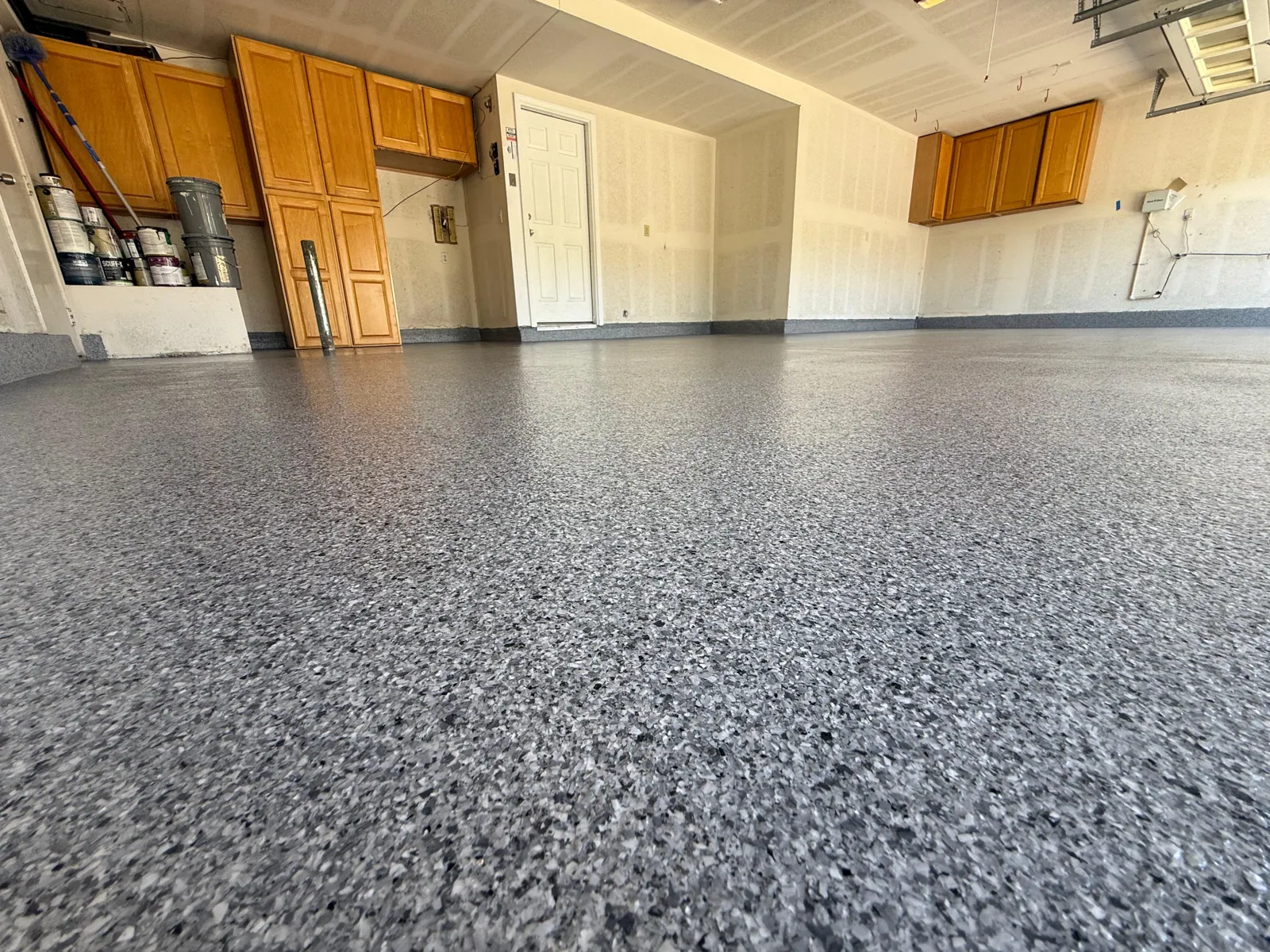
A full-rejection flake broadcast over a diamond-ground slab, sealed with polyaspartic. One day, wall to wall, with chips that hide what the concrete used to look like.
★★★★★ 5-Star Rated · 93 reviews on Google, Facebook, Houzz & more
Free on-site estimate
Tell us about the floor and we will call you back to book a visit.
A flake epoxy floor in Pomona costs $6.50 to $10 per square foot, or $2,600 to $4,000 for a two-car garage of up to 400 sq ft. That includes diamond grinding, crack repair, the basecoat, a full flake broadcast and a polyaspartic topcoat, installed in one day.
Where your floor lands in that range depends on the build. A standard three-layer floor sits near the low end. A build with a double topcoat, or a clear moisture-barrier layer under the basecoat, moves toward $4,000, as does removing an old coating or repairing a lot of cracks.
Bigger floors are priced per square foot from the same rate, so a three-car garage costs more in total but often less per foot. The full table is below.
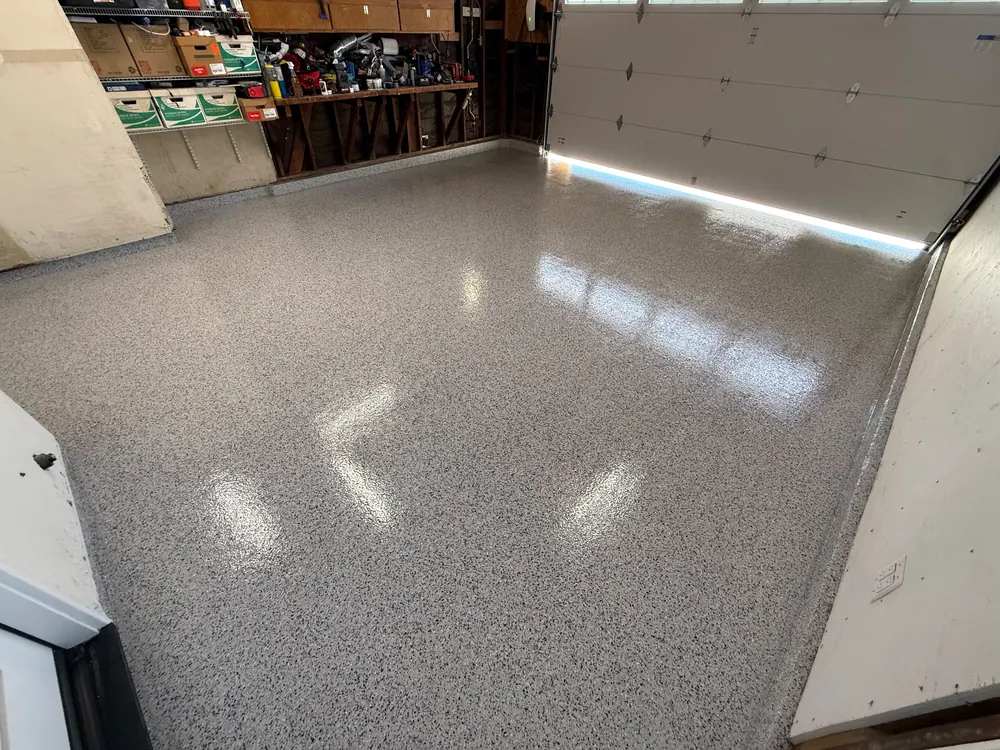 Flake epoxy flooring, Montclair
Flake, also called chip or broadcast flooring, is a layer of colored vinyl chips thrown by hand into a wet epoxy basecoat. On our floors the crew keeps throwing until no wet resin shows, which the trade calls a full-rejection flake broadcast. A partial broadcast, with chips scattered over a painted base, costs less and looks it.
Once the basecoat cures, the crew scrapes the floor to knock off loose and standing chips, vacuums twice, and rolls on a clear UV-stable polyaspartic topcoat. The topcoat locks the chips in and gives the surface its sheen and a light texture you can feel underfoot.
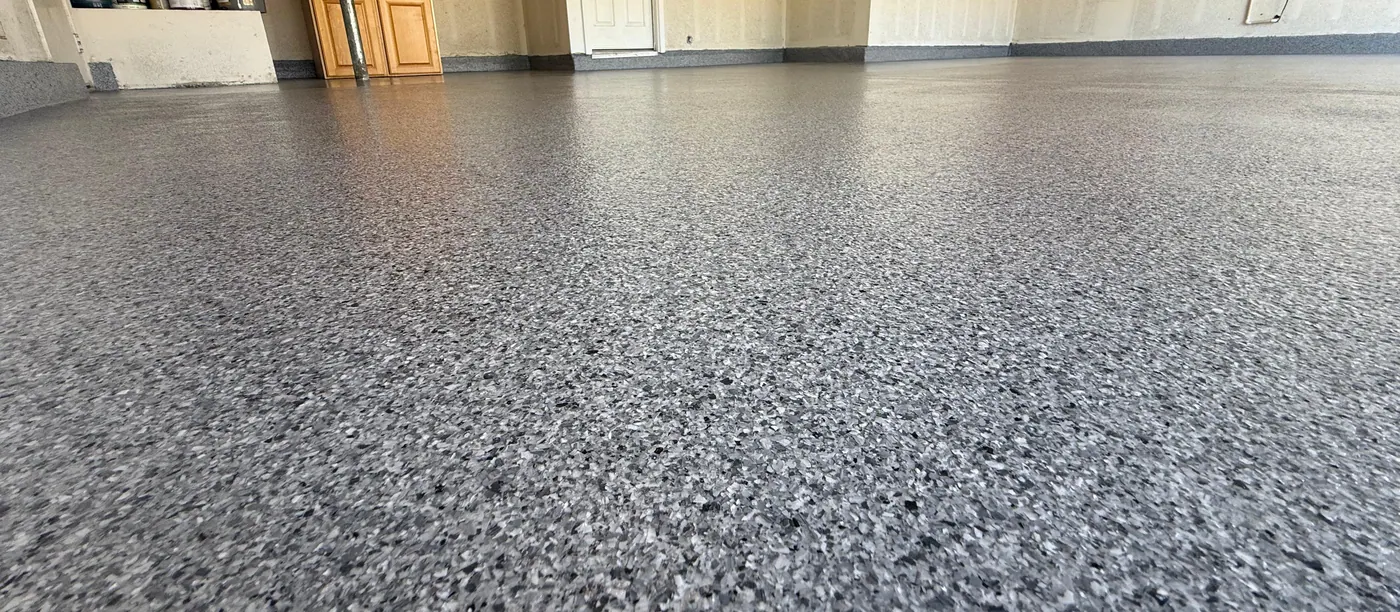
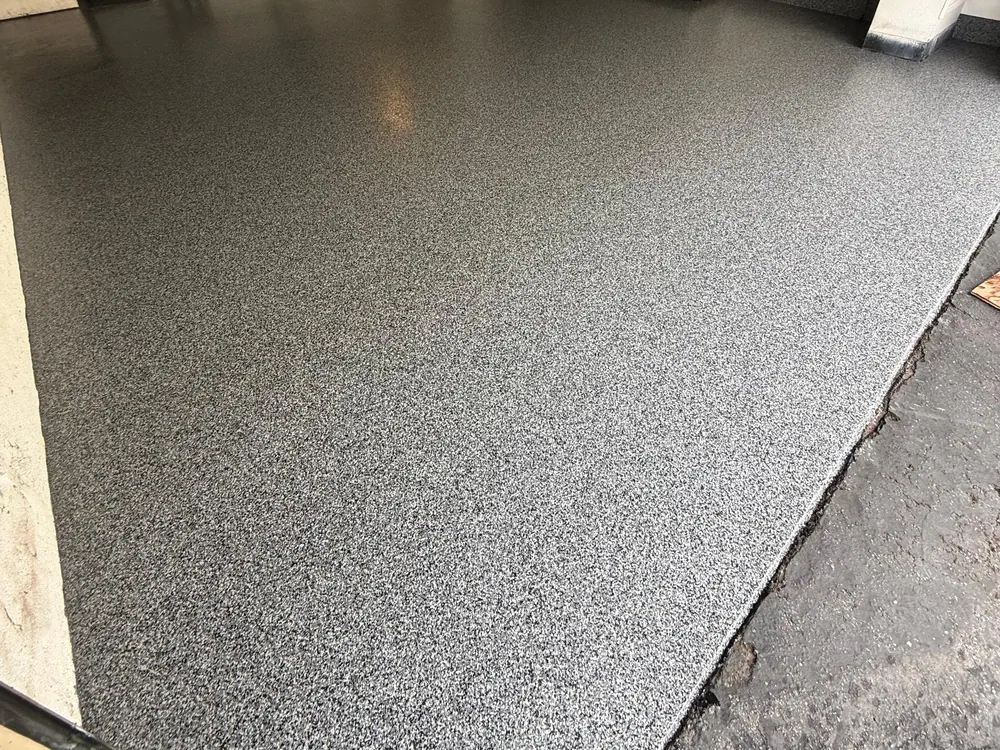
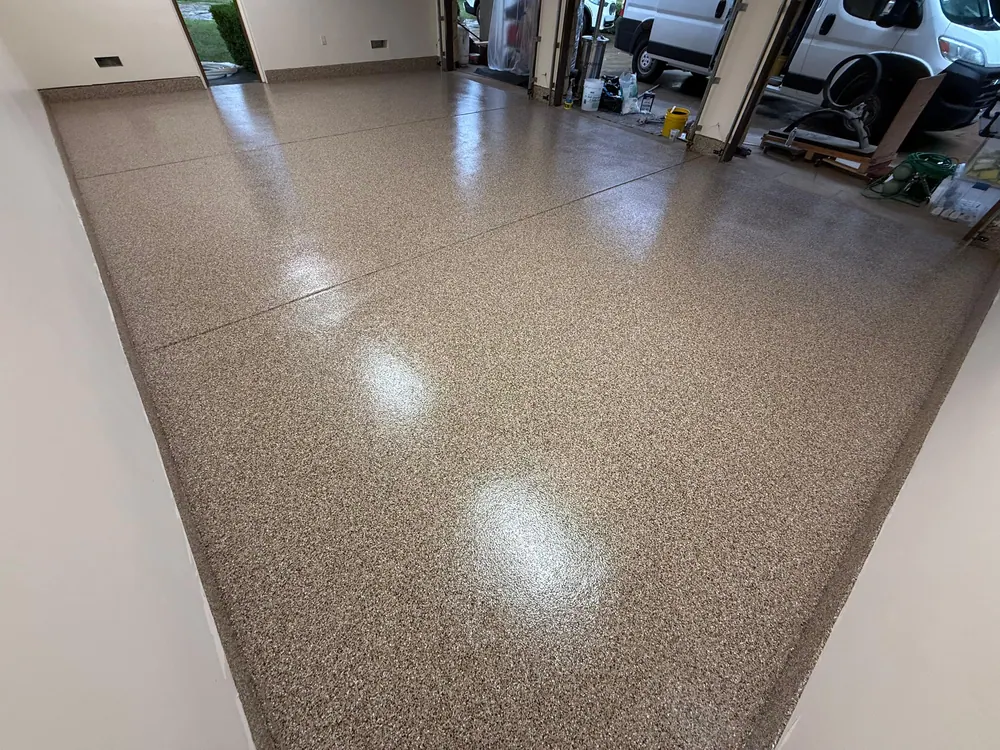
The chip blend sets the look. Gray and black blends hide tire marks and dust, tan blends warm up a garage with wood cabinets, and blends with white chips brighten a dark room. You can see the blends we stock on the color chart.
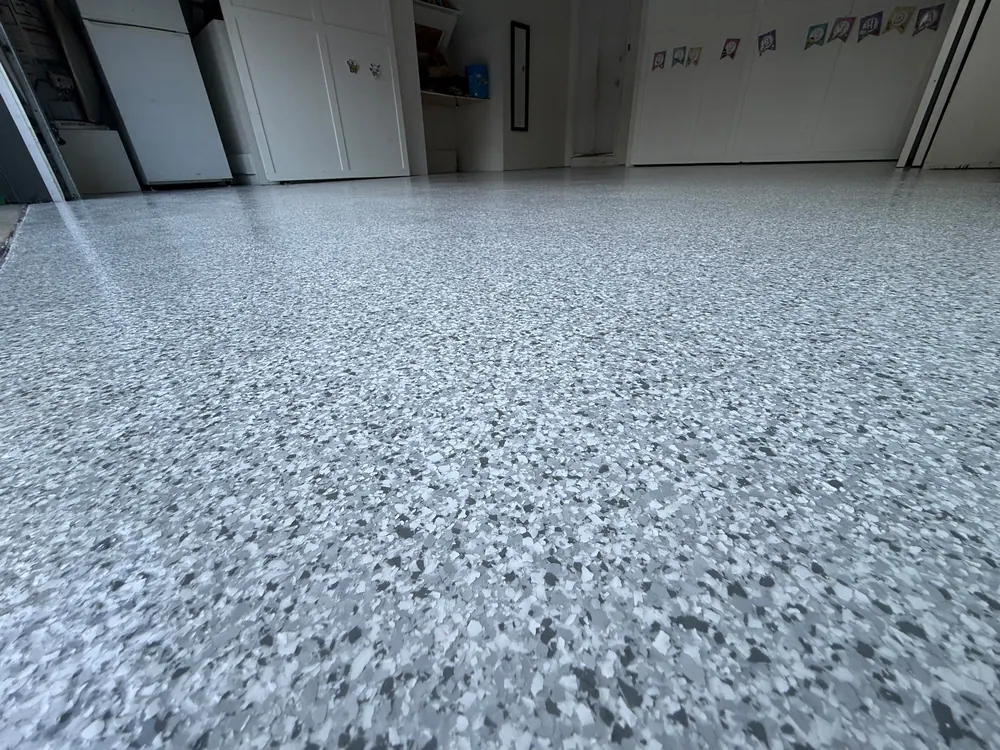 Flake epoxy flooring, Claremont
Flake suits more slabs than any other system we install.
ForgivingThe chips cover repaired cracks, patches and color changes in the concrete that would show through a solid coat.
 1 day
Grind, repair, base, flake and topcoat all happen in a single visit, so the garage is back in use the next day.
 Textured
The scraped chip surface under the topcoat gives shoes and tires more texture than a smooth solid floor.
 Older slabs
Flake over a moisture-barrier basecoat is the safest choice for older slabs that read damp.
Every flake floor we install follows these eight steps in this order.
A moisture meter reading and a crack survey decide which basecoat your slab gets.
Grinding opens a slick or painted slab so resin can soak in and grip.
Polyurea repair compound fills cracks and chips, and the grinder levels each patch.
Two vacuum passes clear the dust that would weaken the bond if left behind.
A tinted epoxy base, matched to the chip blend, goes down in sections across the room.
Chips land in the wet base until the color underneath is gone, edge to edge.
Once the base hardens, scrapers knock down chips that stand up, then the floor is vacuumed.
The UV-stable polyaspartic coat locks in the flake and resists hot tires from Pomona summers.
The crew arrives in the morning and walks the garage with you to confirm the blend, the edges and any repairs. Grinding takes the first few hours. A HEPA dust collector runs with the grinder, so the dust goes into a bag instead of your house.
By late morning the cracks are filled and the basecoat goes down, tinted to match the blend. The flake broadcast follows right away while the base is wet. After lunch the base has cured enough to scrape and vacuum, and the polyaspartic topcoat goes on in the afternoon.
You can walk on the floor that evening. Park after 24 hours, and wait a few days before you drag heavy tool chests or set jack stands. Our garage floor epoxy guide covers how to prepare the garage before we arrive.
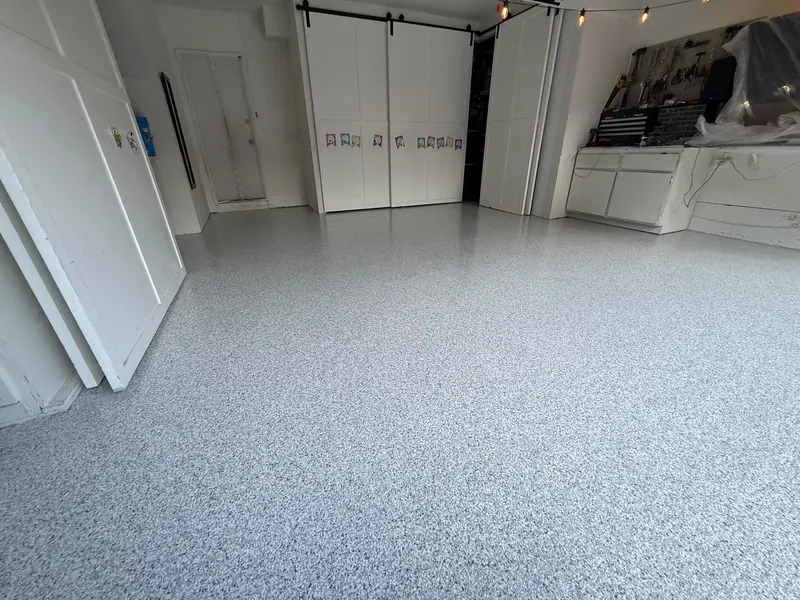
 Flake epoxy flooring, Claremont
Think about what the floor has to hide. A garage where you work on cars does best with a mid-gray or charcoal blend, which hides tire marks and oil shadows. A tidy garage with white cabinets looks sharp in a light gray blend with black and white chips.
Pomona gets bright sun much of the year, and the light through an open garage door shows every tone of the floor. Look at the chips in daylight at your estimate, on your own slab, rather than on a screen.
Chip size matters too. Quarter-inch chips are the common garage size and give the classic speckled look. Smaller chips read as a finer texture, which suits laundry rooms and patios. We bring samples so you can compare both. For a business with heavy traffic, see our commercial floors.
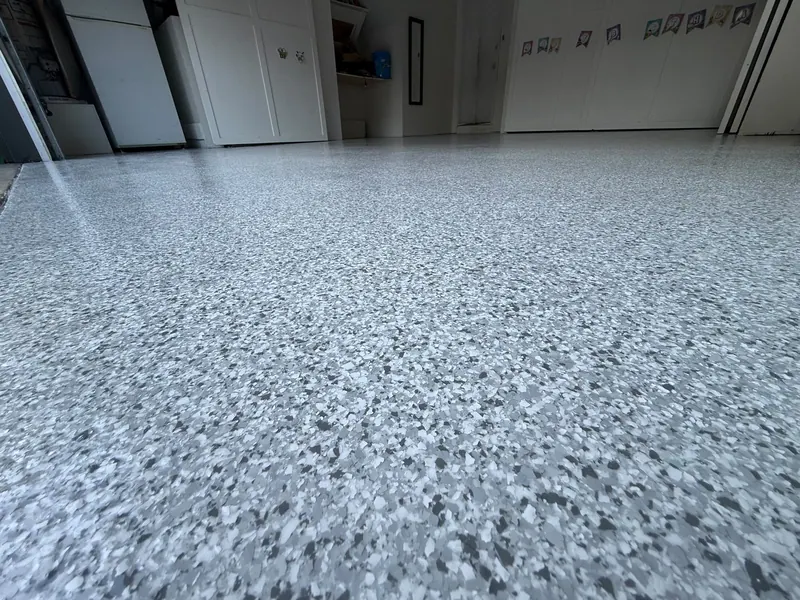
 Flake epoxy flooring, Glendora
Choose flake over solid color epoxy when the slab has flaws or you want it done in a day. Solid color takes 3 days and shows every imperfection. Choose flake over metallic epoxy for a working garage. Metallic is a showpiece finish and scratches show on it more.
Quartz is the step up when traction matters most, such as a wash bay, a ramp or a pool equipment room. Our quartz & sand finish page compares the two in detail.
The same flake build works outside on patios and walkways with a finer chip, and the outdoor coatings page covers the outdoor version.
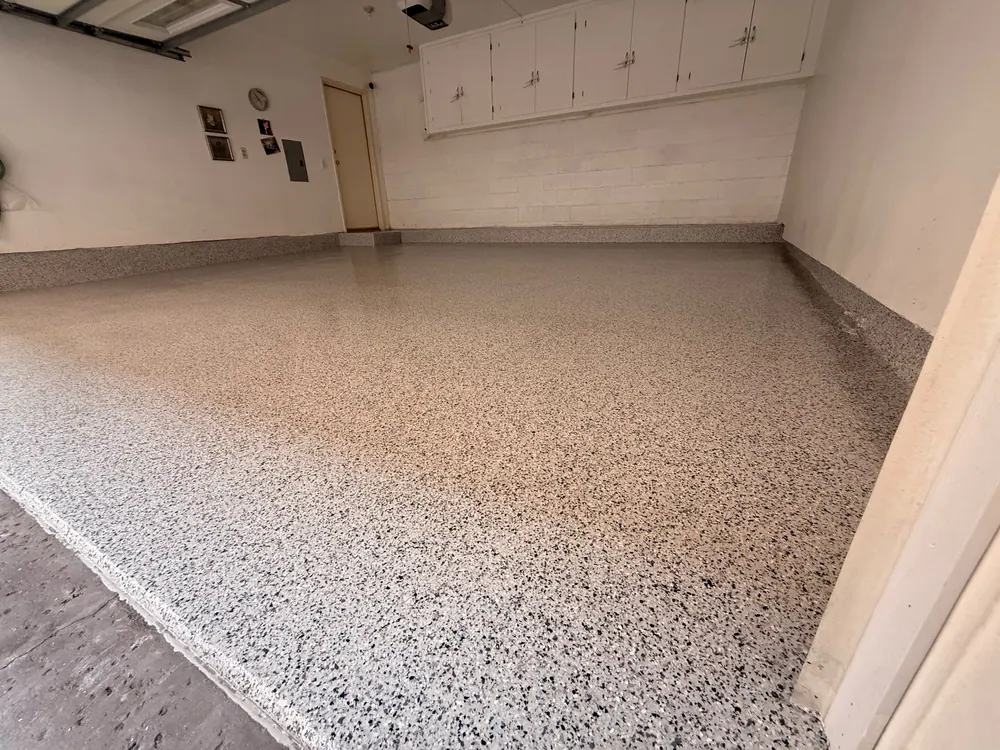 Flake epoxy flooring, Chino Hills
A flake quote should name the prep method, the basecoat, the flake size, how full the broadcast is and the topcoat. If a quote says "epoxy garage floor" and nothing else, you have no way to compare it. Ask whether the price covers crack repair, stem walls and the step into the house.
Ours lists diamond grinding, crack and pit repair, an epoxy basecoat, a full broadcast of quarter-inch vinyl flake and a polyaspartic topcoat. It also names the limited lifetime adhesion warranty and the moisture reading from your slab. The price for a two-car garage of up to 400 sq ft lands between $2,600 and $4,000.
Watch for partial broadcasts sold as full ones. A light scatter of chips over a gray base costs less to install, but it shows tire marks and hides less of the slab. You can see what a full broadcast looks like on finished floors in Diamond Bar and San Dimas.
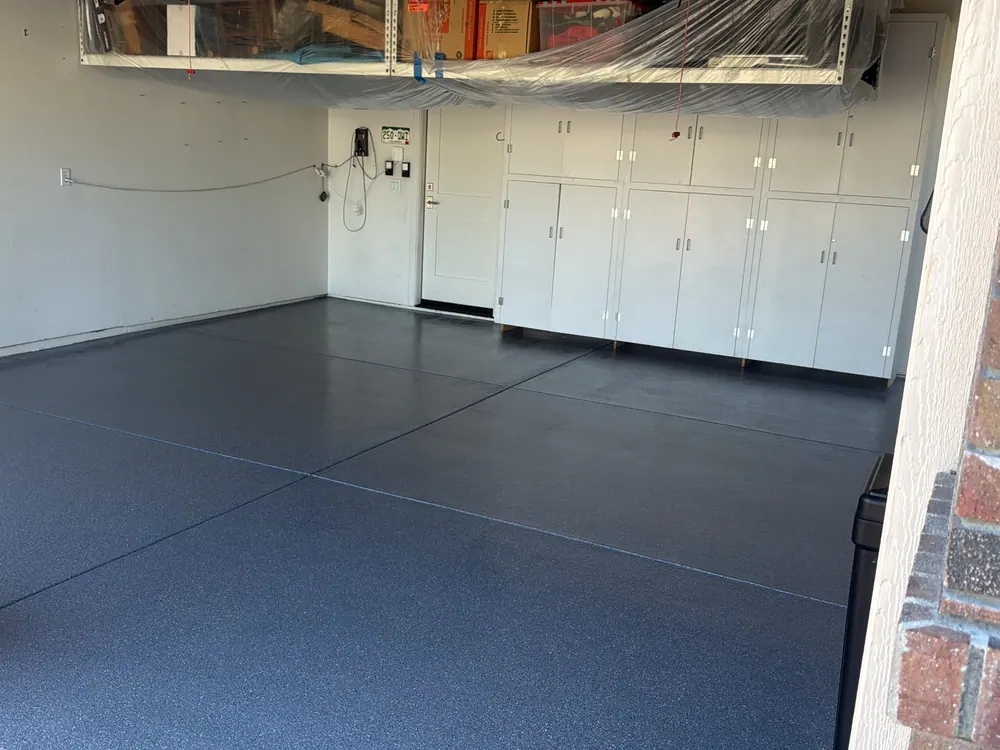 Flake epoxy flooring, West Covina
Sweep or dust mop once a week, and wash with warm water and a mild cleaner when the floor looks dull. A soft deck brush lifts grime from the texture between chips. Skip acid cleaners and citrus degreasers, which can haze the topcoat over time.
Wipe up brake fluid, battery acid and pool chemicals the same day. Oil and antifreeze sit on top of the polyaspartic and wipe off with a rag. Put a mat under the spot where your wipers drip in winter so grit does not grind into the finish.
Use plywood under jack stands and the kickstand of a heavy motorcycle. Floor jacks on steel wheels can scratch, so roll them on a piece of cardboard. If you ever want a fresh topcoat years from now, we can scuff and recoat the floor without grinding it back to bare concrete. That matters most for home shops, like the ones we coat in Ontario.
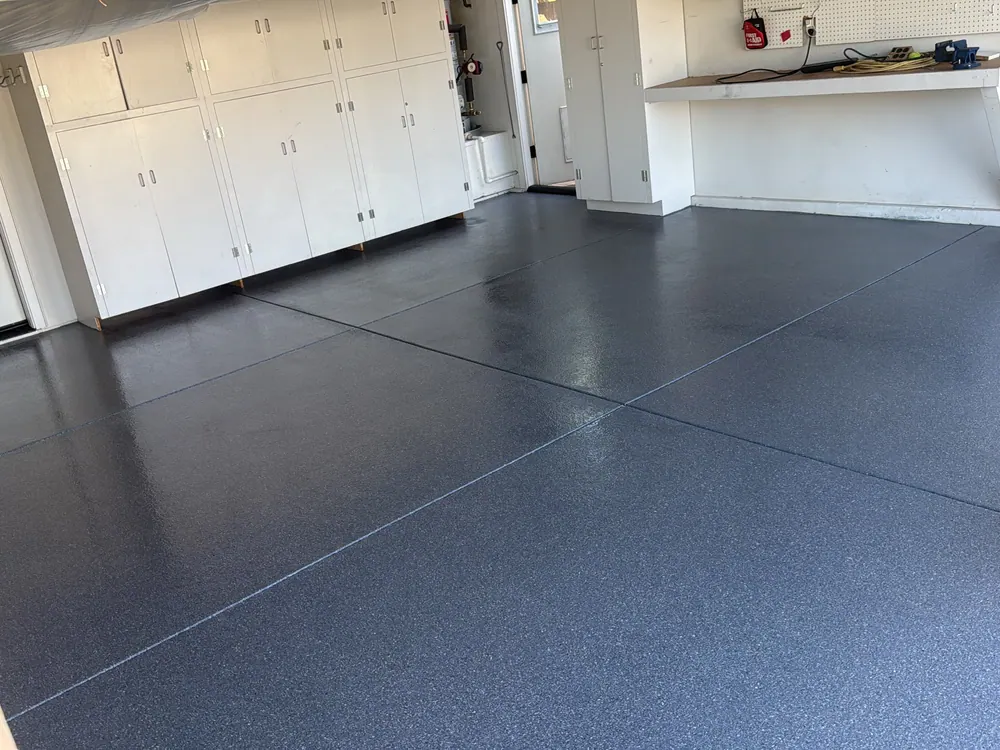 Flake epoxy flooring, West Covina
Typical two-car garage means up to 400 sq ft. Projects start at $2,600. Flake is listed with the two systems people most often compare it with.
| System | Per sq ft | Typical two-car garage (up to 400 sq ft) | Install time |
|---|---|---|---|
| Flake epoxy | $6.50-$10 per sq ft | $2,600-$4,000 | 1 day |
| Solid color epoxy | $9.50-$11.50 per sq ft | $3,800-$4,600 | 3 days |
| Quartz & sand finish | $9-$16.50 per sq ft | $3,600-$6,600 | 2-3 days |
Prices and details reviewed November 2026.
The estimate form is the fastest way to get your own number.
Tap any photo to see the whole floor.
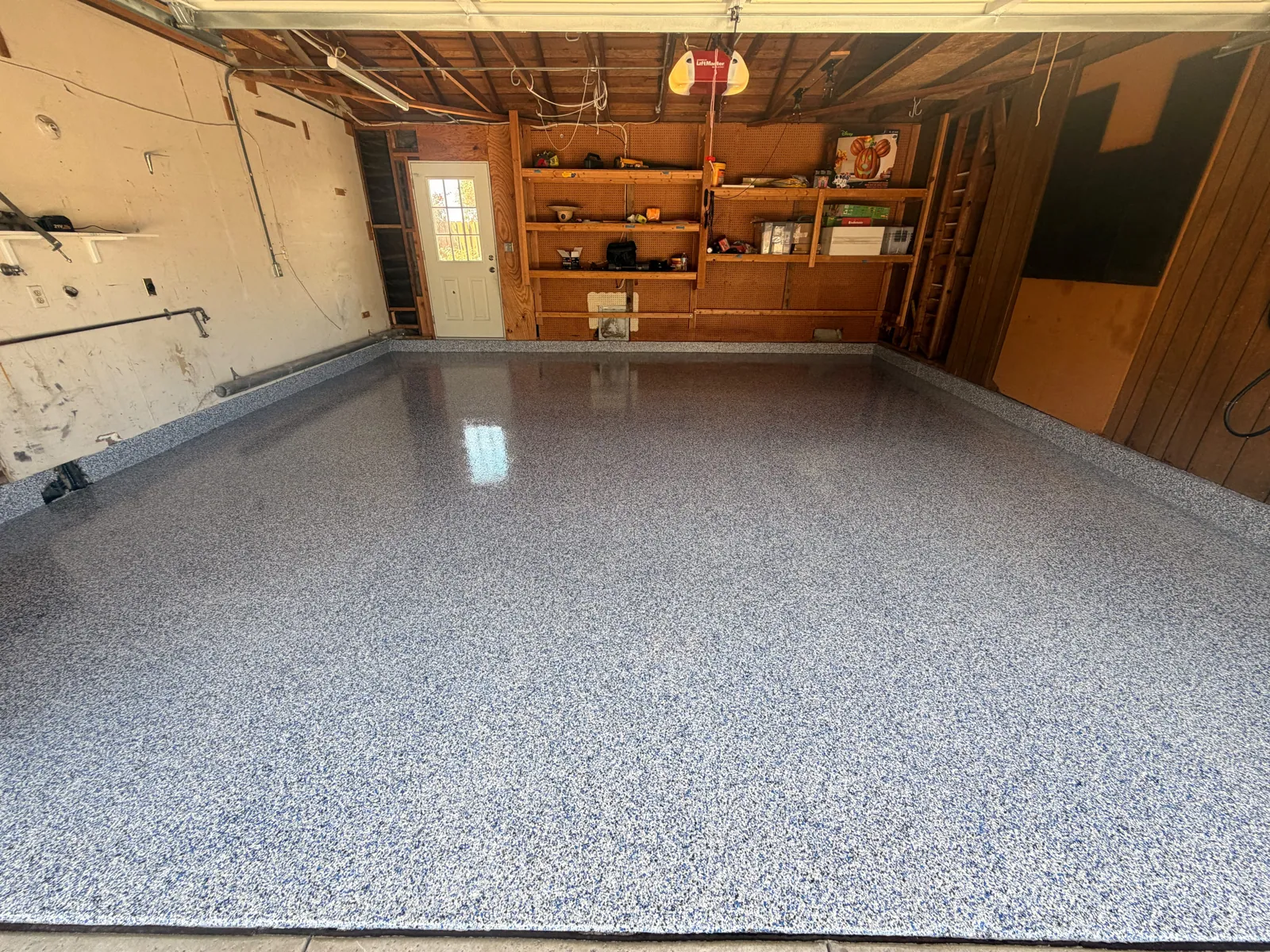
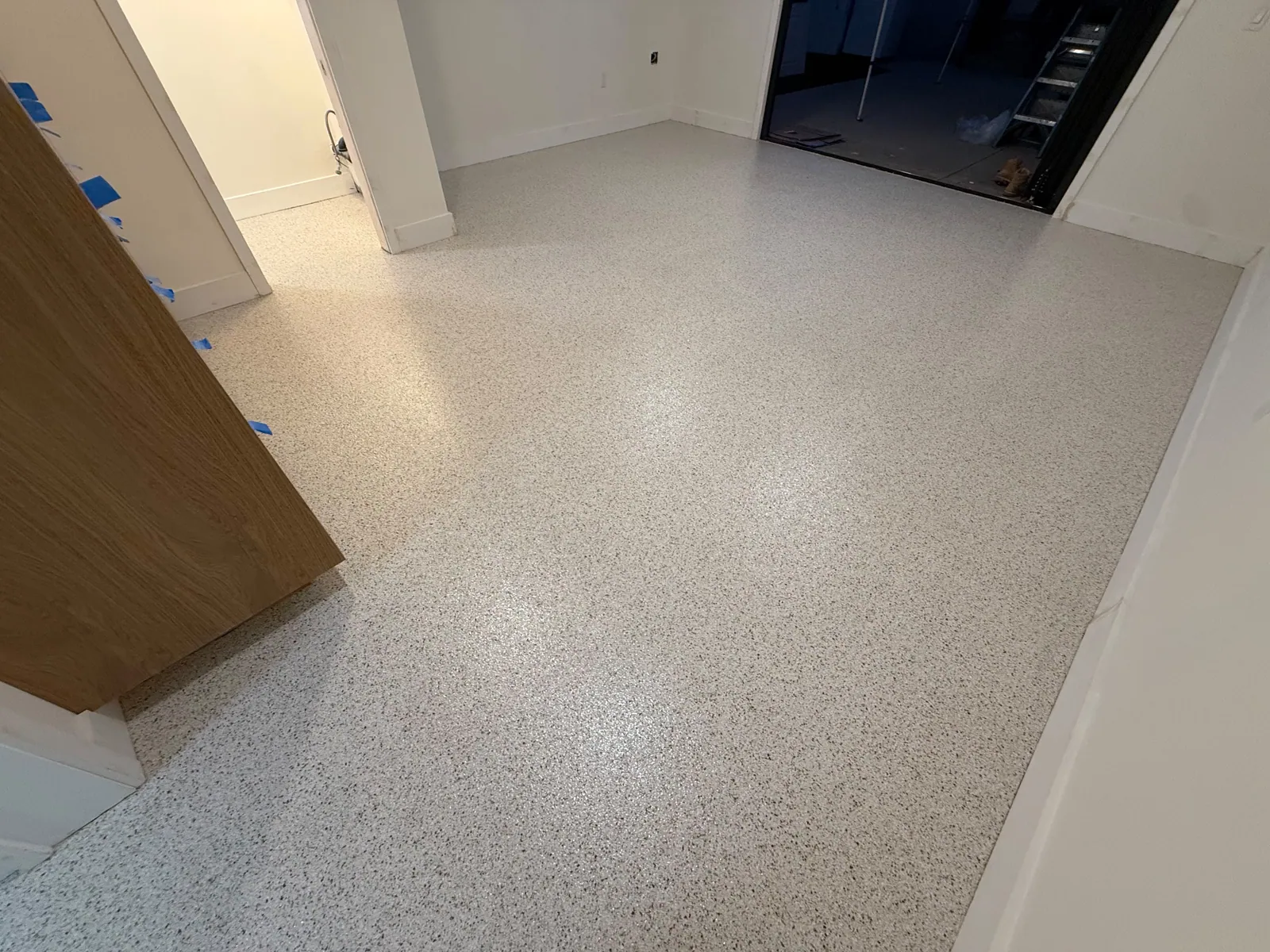
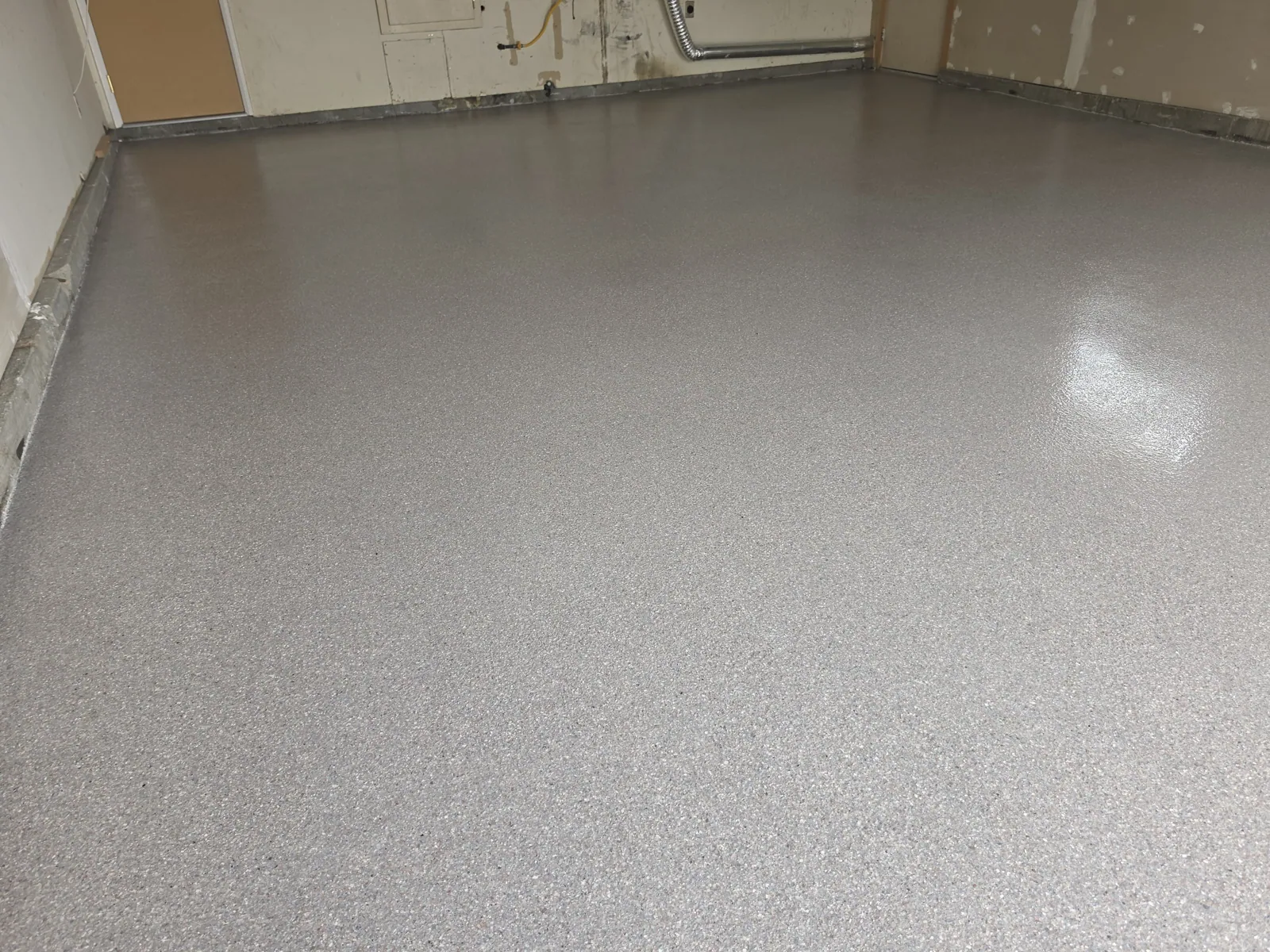
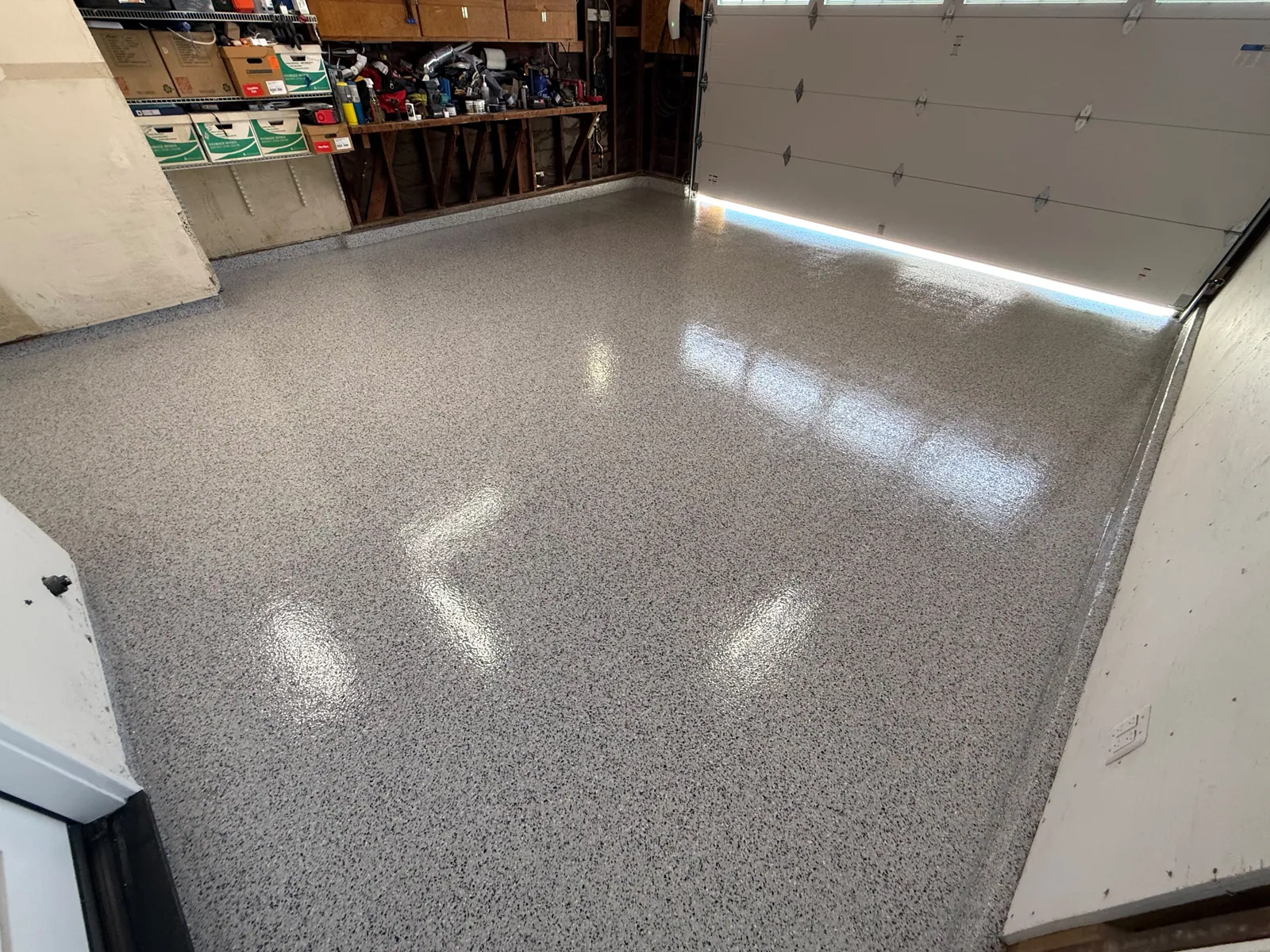
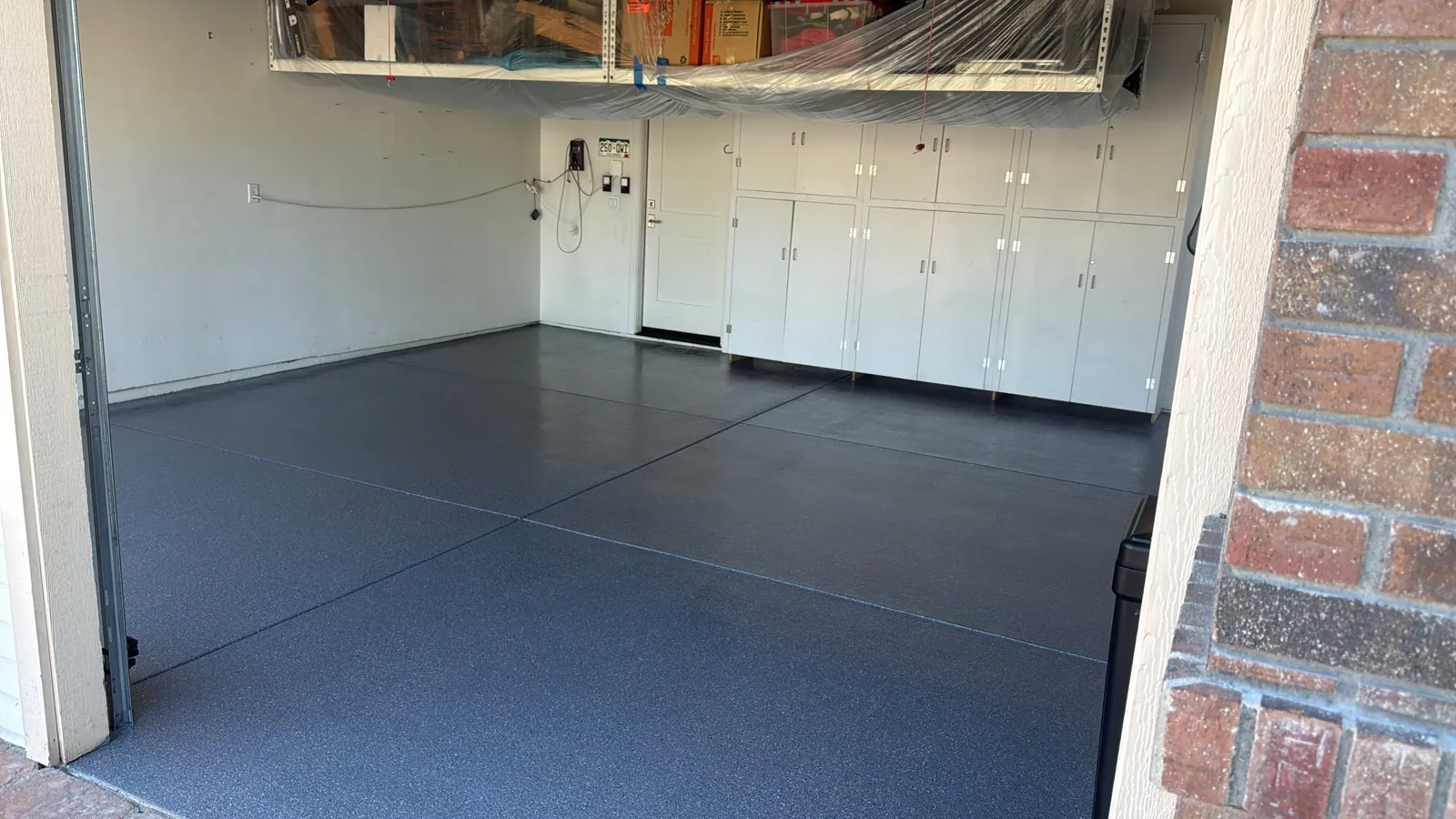
Compare flake with the other finishes or browse more photos.
A flake floor costs $6.50 to $10 per sq ft, or $2,600 to $4,000 for a two-car garage of up to 400 sq ft. The price includes grinding, crack repair, the basecoat, a full flake broadcast and a polyaspartic topcoat, installed in one day.
Full broadcast means the crew throws flake into the wet basecoat until no resin shows through. It uses more chips than a partial scatter and gives a dense, even floor that hides the concrete completely.
A flake floor has a light texture from the scraped chips under the topcoat, so it grips better than a smooth coating. Standing water or oil on any floor reduces grip. We can add an anti-slip additive to the topcoat for garages that see a lot of water.
Life depends on prep, moisture, traffic and care, so no honest installer gives one number. A ground slab with a polyaspartic topcoat is built for years of daily garage use, and our limited lifetime adhesion warranty covers the bond to the concrete.
Yes. We fill cracks with a polyurea repair compound and grind them flush, and the chips hide the repair. Cracks that are still moving can reappear in any coating, and we point those out before you decide.
Sweep or use a dust mop, then wash with warm water and a mild cleaner. For oil, wipe it up and use a degreaser. Avoid acid cleaners and steel brushes, which dull the topcoat.
Yes. We carry a range of standard blends, and you can see them on our color chart. At the estimate we bring physical samples so you can see the chips on your own slab in daylight.
Yes. The same build works on patios, walkways and pool decks with a finer chip and a slip-resistant topcoat. Outdoor coating runs $8 to $12 per sq ft and takes 1-2 days.
We measure, test the concrete for moisture and give you a written price before any work starts. Projects start at $2,600.