
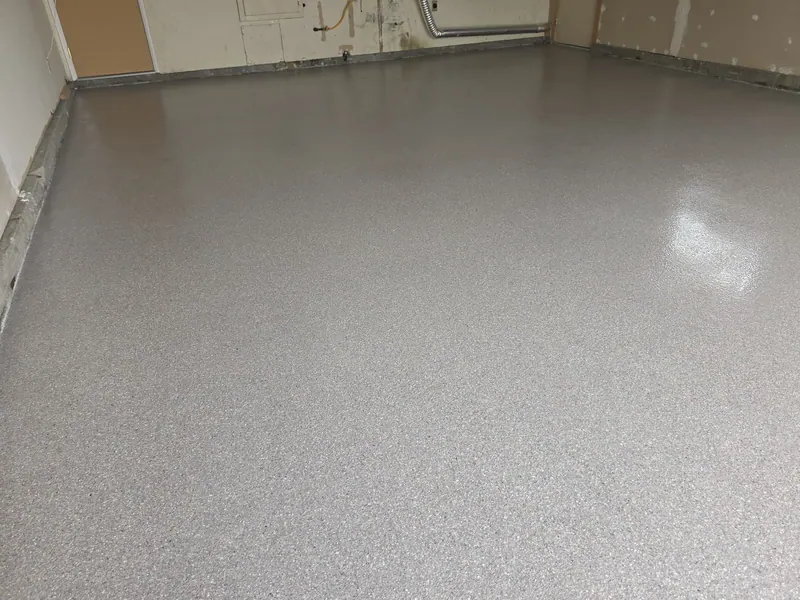
 Easy clean
Oil and stains wipe up
Oil, coolant and brake fluid sit on top of the topcoat instead of soaking in, so a rag and degreaser clean them.
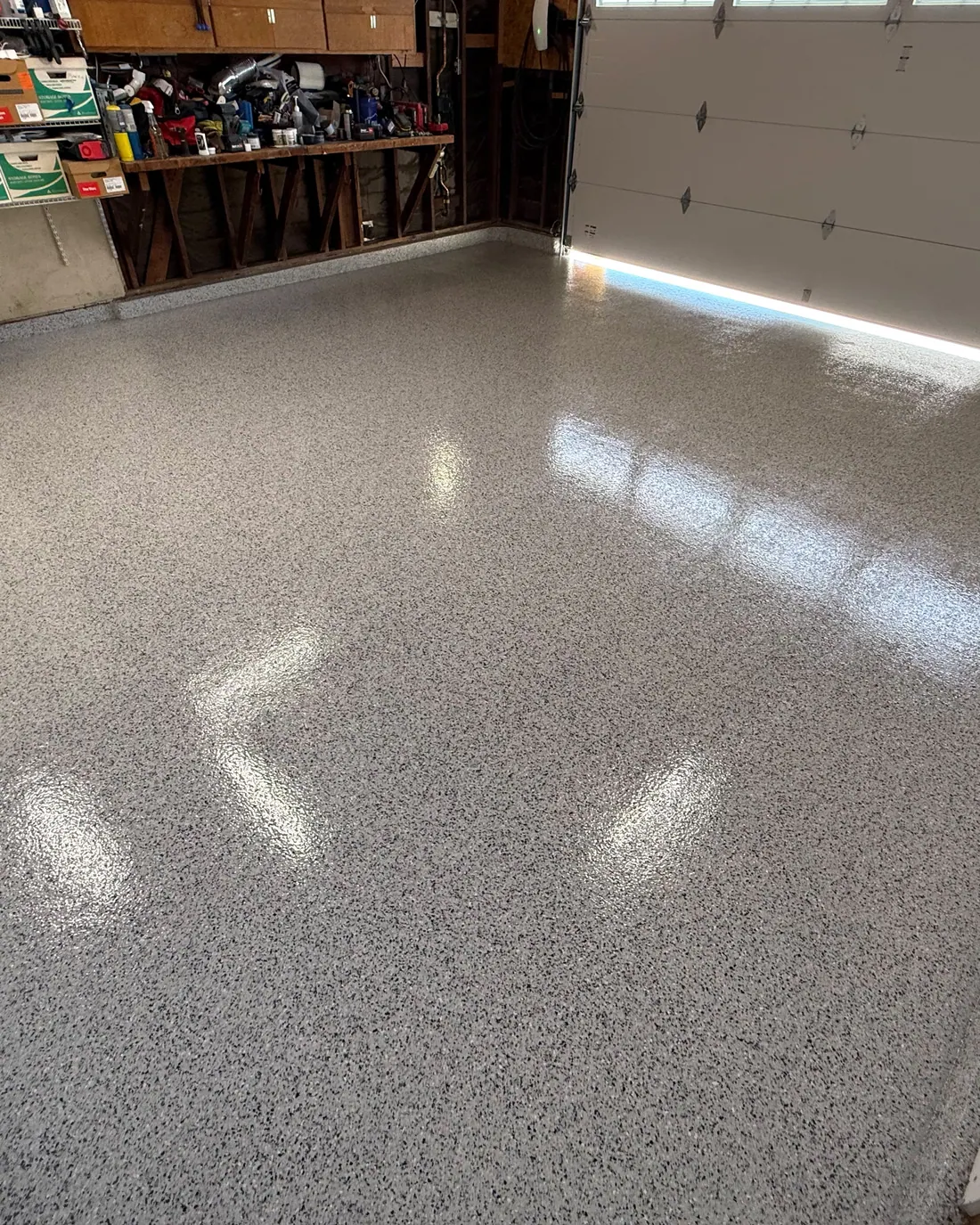
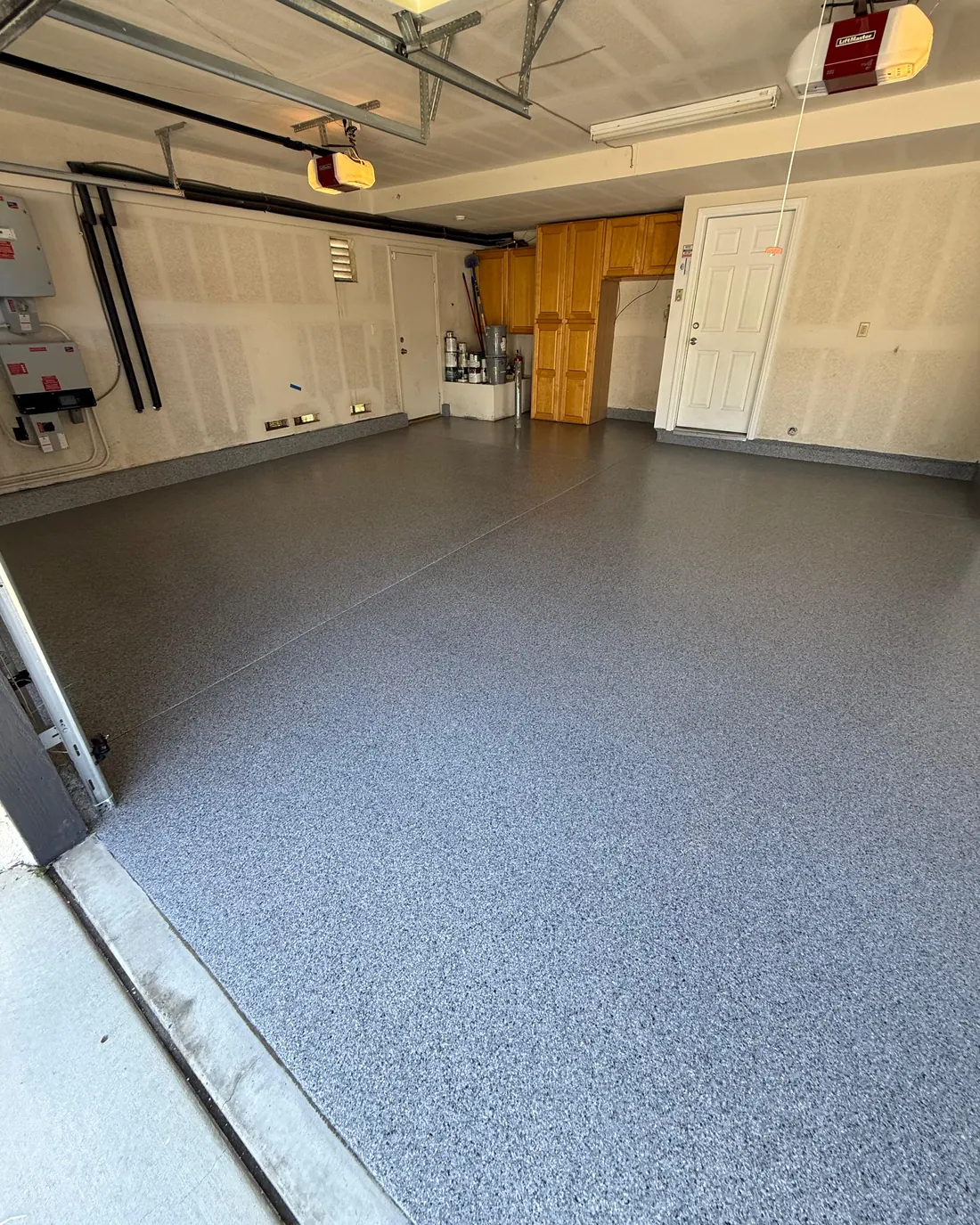
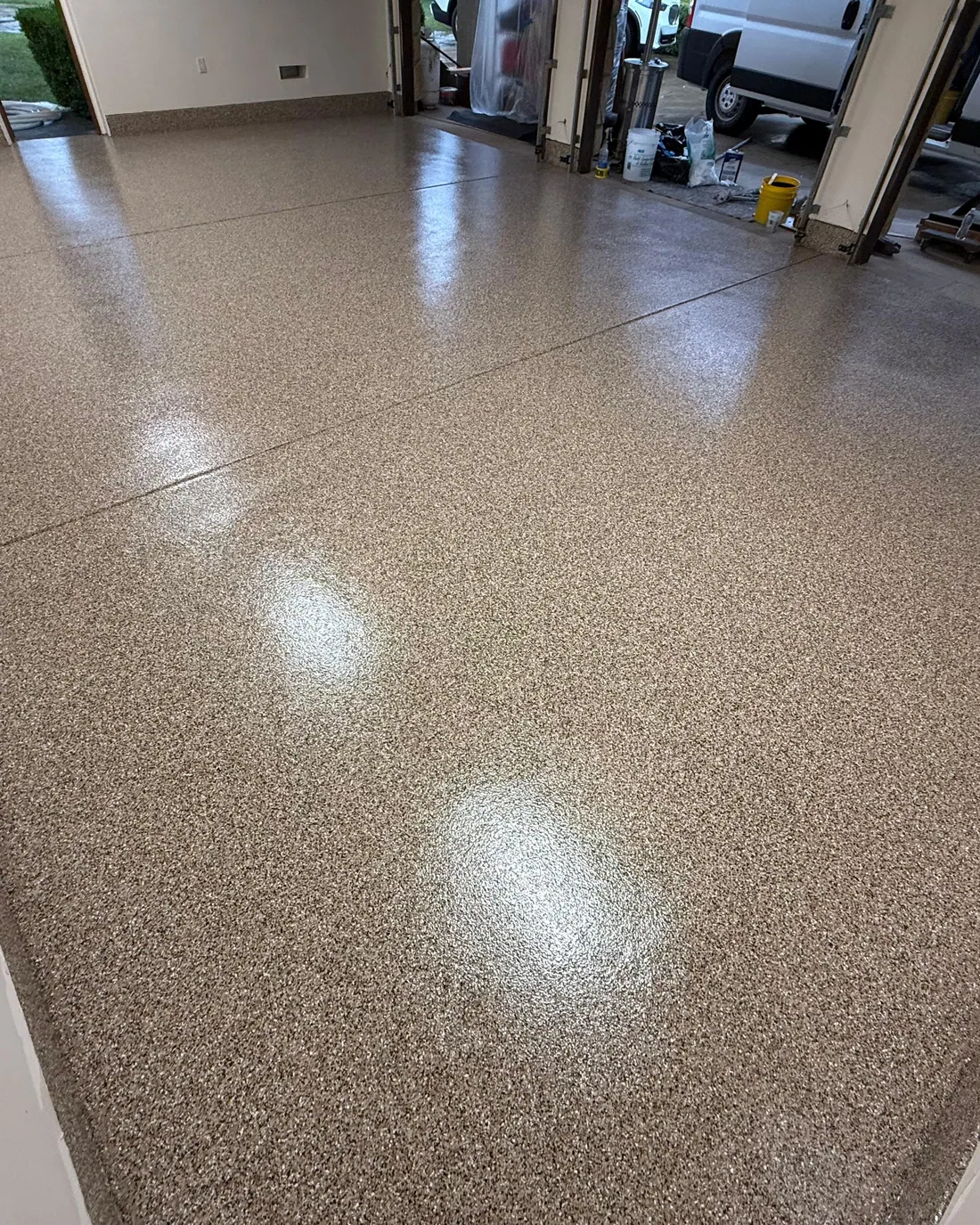
Every garage coating option we install, side by side: what each one costs, how long it takes and which slab it suits.
★★★★★ 5-Star Rated · 93 reviews on Google, Facebook, Houzz & more
Free on-site estimate
Tell us about the floor and we will call you back to book a visit.
An epoxy garage floor in Pomona costs $2,600 to $4,000 for a two-car flake system of up to 400 sq ft, and the crew installs it in one day. Solid color runs $3,800 to $4,600, metallic $5,000 to $7,400, and quartz $3,600 to $6,600. Grind and seal, the plain protective option, runs $2,600 to $3,600.
Those totals include diamond grinding, standard crack repair, materials and labor. What moves a price inside its range is the slab: old paint or coating that has to come off, deep cracks, oil soaked into the concrete, or a moisture reading that calls for a heavier basecoat. A three-car garage or a garage with a workshop bump-out costs more in total and often less per square foot.
You can see every system and its per-square-foot rate in the price table. The estimate is free, and we write the number down before any work starts.
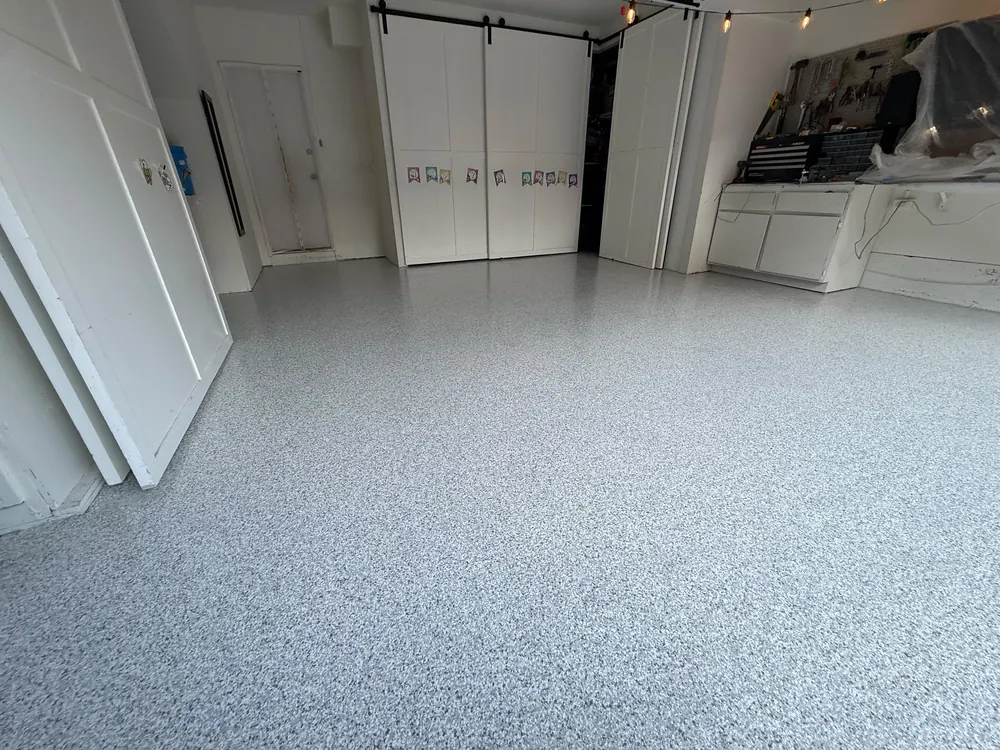 Epoxy garage floor, Claremont
A garage floor coating is only as good as its bond to the concrete. New slabs come from the builder with a smooth, hard trowel finish, and older slabs carry paint, sealer, oil and tire residue. Nothing sticks well to any of those. So the first job is diamond grinding, which cuts the top of the slab down to clean, open concrete with the texture the coating maker calls for.
After grinding, the crew fills cracks and pits, vacuums the dust out of the pores and rolls on the basecoat. On a flake floor that basecoat gets a full broadcast of vinyl chips. On a solid color floor it gets a second pigmented coat, and on a metallic floor the crew works pigments through the resin by hand. Every system then gets a UV-stable polyaspartic topcoat.
Store kits from a home center skip the grinding and use a thin water-based epoxy. They look fine for a season and then lift where hot tires sit. That pattern is the most common repair call we see, and the fix is the same full prep a new floor gets. If your slab is damp, our grind and seal page explains the lighter option.
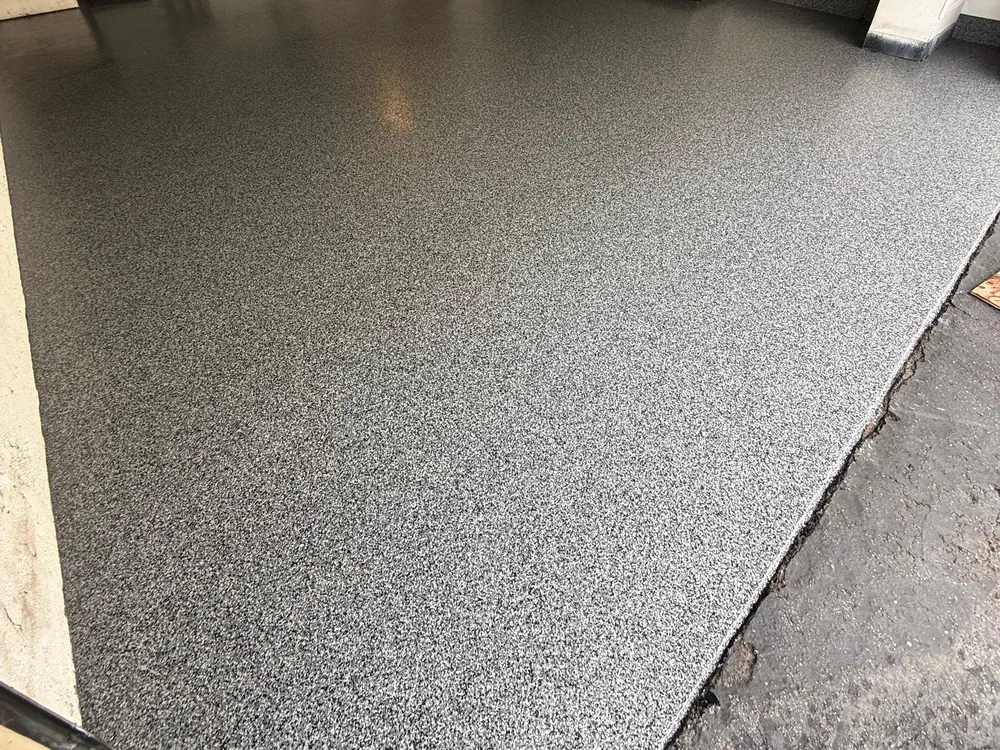 Epoxy garage floor, Claremont
Most people coat the garage for one of four reasons. The cards below cover each, and the system pages go deeper.
Easy cleanOil, coolant and brake fluid sit on top of the topcoat instead of soaking in, so a rag and degreaser clean them.
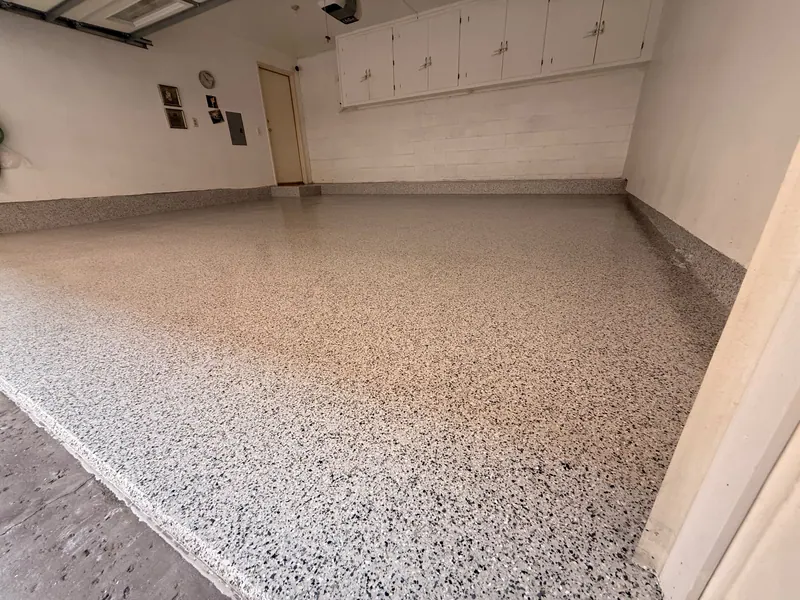 Sealed slab
Bare concrete sheds a fine dust every time you sweep. A coated slab is sealed, so the dust ends with the coating.
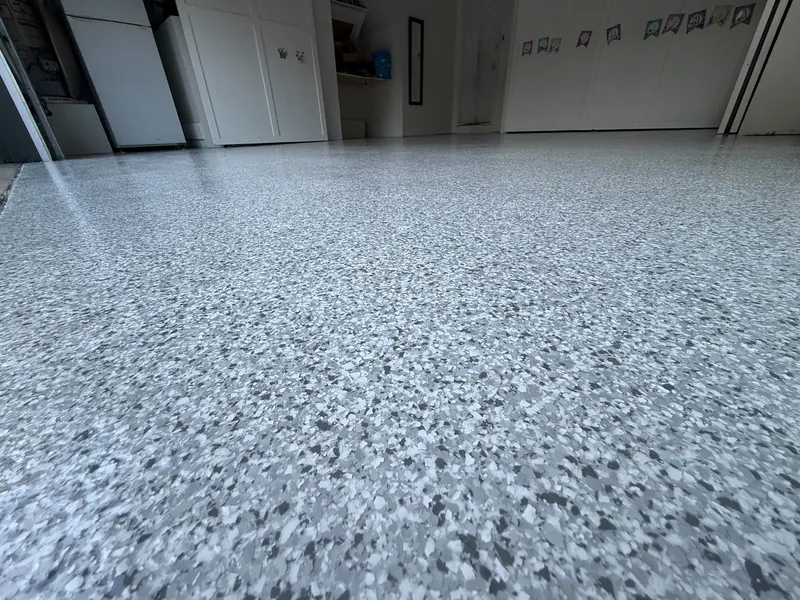 Textured
The flake broadcast and the topcoat texture give tires and shoes more grip than a painted floor when it gets wet.
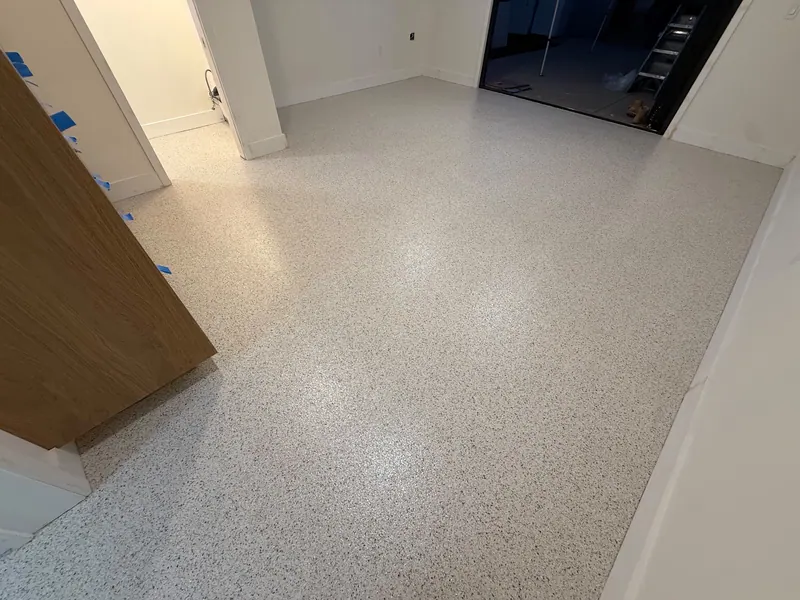 Brighter room
A bright, finished floor makes the garage a workshop, gym or play space and helps light bounce around the room.
Flake is the system most Pomona garages get, so here is the flake process from start to finish. Solid and metallic floors follow the same prep.
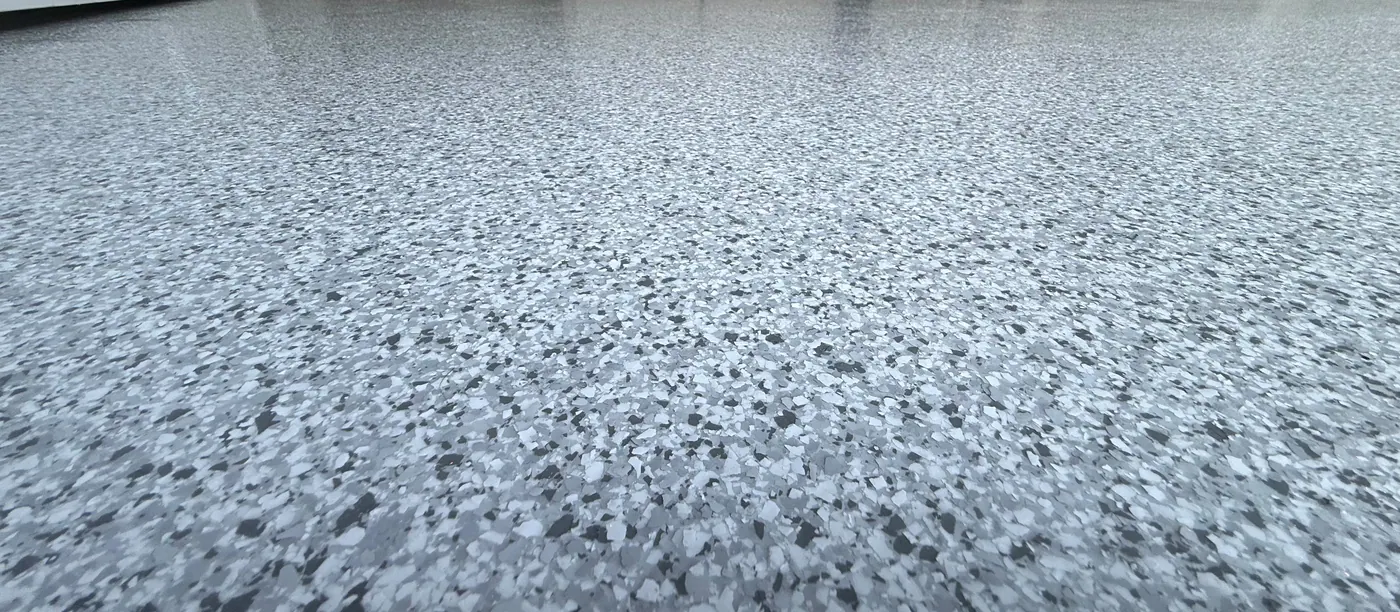
The crew reads the moisture level and maps cracks, stains and old paint across your garage.
Diamond heads cut the old trowel finish and any paint down to fresh, open concrete.
Every crack, pit and expansion gap gets a polyurea filler, ground flat once it sets.
Vacuums with HEPA filters pull grinding dust from the pores and the wall edges.
The moisture-barrier epoxy basecoat goes on in a tint chosen to sit under your chips.
The crew throws chips by hand until no wet base shows anywhere on the garage floor.
Loose and standing chips come off with floor scrapers, then a second vacuum pass.
Clear polyaspartic seals the chips, and the garage is walkable by the evening.
A flake garage takes one day. The crew grinds and repairs in the morning, lays the basecoat and flake before lunch, then scrapes, vacuums and rolls the polyaspartic topcoat in the afternoon. You can walk on it that evening. Give it 24 hours before you drive on it and a few days before heavy rolling tool chests or a car lift.
Solid color takes 3 days because each coat needs time to cure before the next. Metallic takes 3-4 days, and quartz and sand finish 2-3 days. Grind and seal takes 1-2 days.
You empty the garage before we arrive. We need the floor clear wall to wall, power to the garage, and the door working. We tape the bottom of the walls, protect the door weatherstrip and leave the space clean, and we finish the visit with a walkthrough so you can see the floor and ask questions.
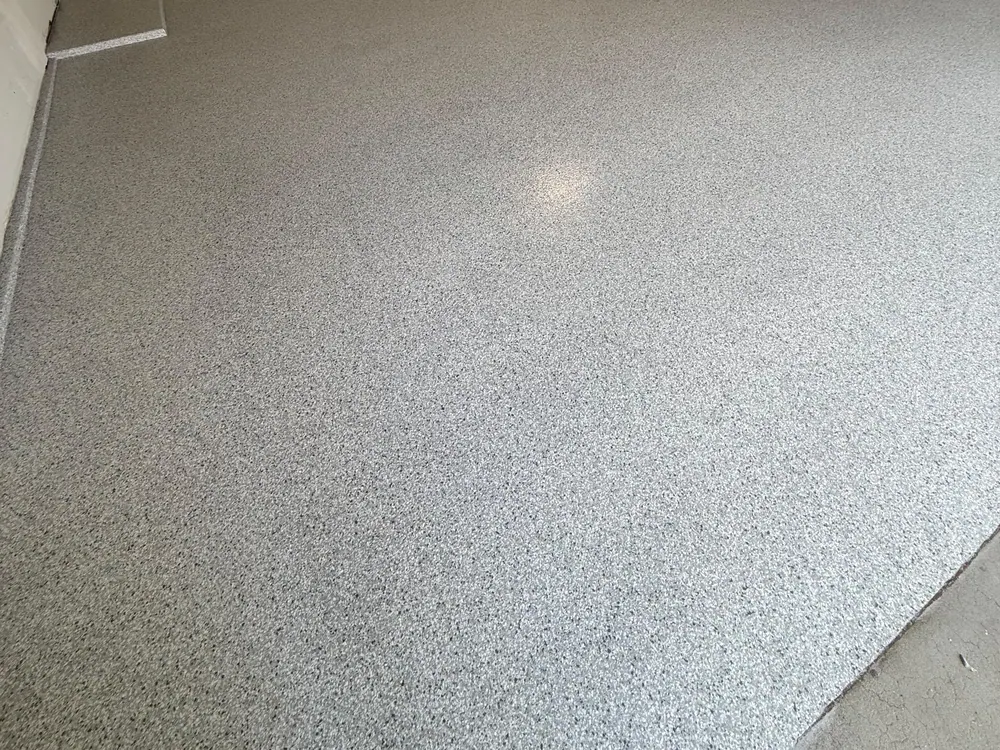 Epoxy garage floor, San Dimas
Pick flake if the slab has cracks, patches, stains or a moisture reading near the limit. The chips hide repairs and the full broadcast forgives an imperfect surface. Pick solid color if the slab is in good shape and you want a clean shop look. Pick metallic if the garage doubles as a showroom or studio and the concrete is dry and sound.
We steer damp or beat-up floors away from solid and metallic. Those finishes show every ripple and pinhole, and moisture under a solid coat can raise blisters. Flake handles both problems far better, so it is what we recommend for most garages built before the 1970s.
Garages that get hot afternoon sun through an open door need a topcoat with UV stability. Every polyaspartic topcoat we use holds its color, so a west-facing door in Phillips Ranch will not turn the floor yellow the way an epoxy topcoat can. Browse flake blends on the color chart before your estimate.
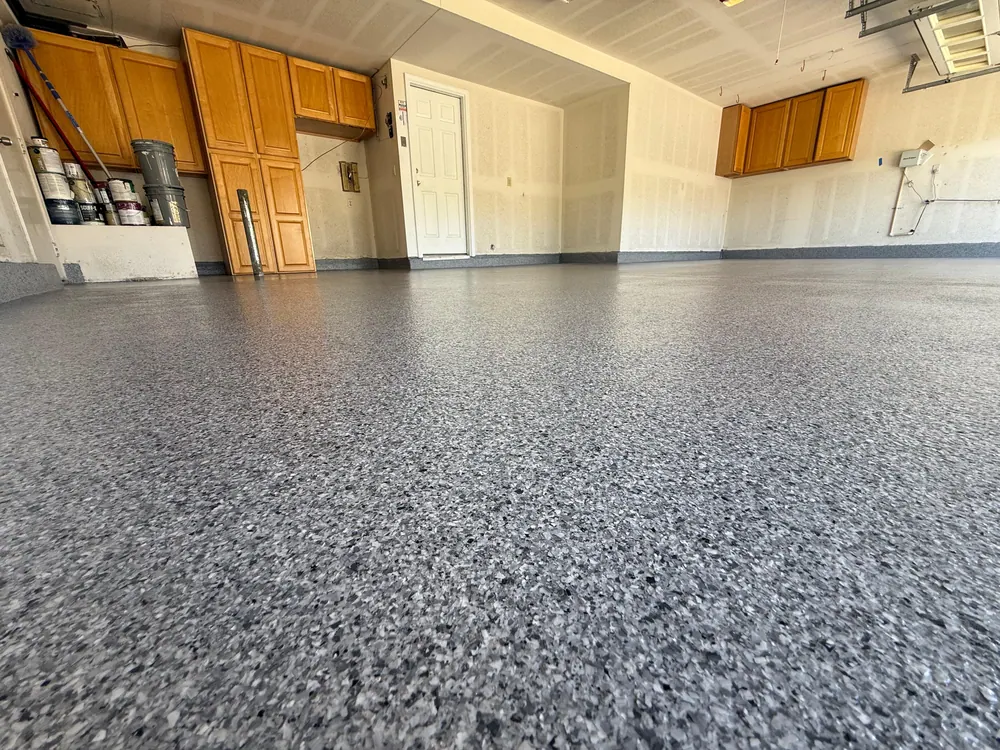 Epoxy garage floor, Diamond Bar
Garage floor paint is the cheapest finish and the shortest lived. It peels under hot tires, often within a year. Interlocking tiles avoid prep but trap water and grit under the seams. Polished concrete looks sharp but stains with oil.
Epoxy and polyaspartic belong together. Epoxy makes a strong basecoat that tolerates some moisture, and polyaspartic, a type of polyurea, makes the topcoat because it cures fast and stays clear in sun. Some companies sell polyurea garage floors as a single coat. We prefer the layered build because each product does the job it does best.
If you only want a cleaner, sealed slab without color, grind and seal gives you that for less. For patios and driveways, see outdoor concrete coatings, and for business floors see our commercial floors.
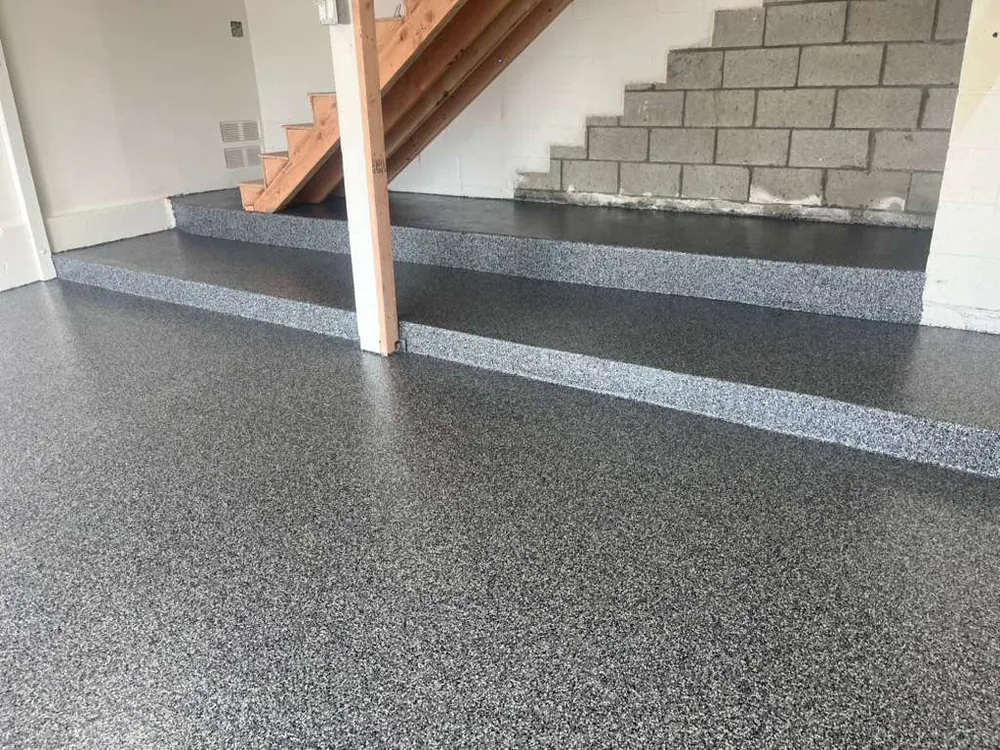 Epoxy garage floor, Rowland Heights
Clear the floor the day before. Cars, bikes, bins and anything sitting on the slab need to come out, and wall cabinets can stay where they are. If you have a freezer or a workbench that is hard to move, tell us at the estimate and we plan the grind around it.
Show us the nearest outlet at the estimate. Keep pets and kids inside while the crew works, since the grinder is loud and the resin has a smell until it cures. We follow the same plan on garages in Claremont and Chino, so ask us about street parking rules on your block if you need them.
After the topcoat goes down, leave the door closed until the next morning. Put shelves and bins back after 24 hours, and wait 24 hours before you drive on it. Owners who want a new look on the walls often pick a blend from the color chart first and paint after the floor cures. See finished garages in our gallery.
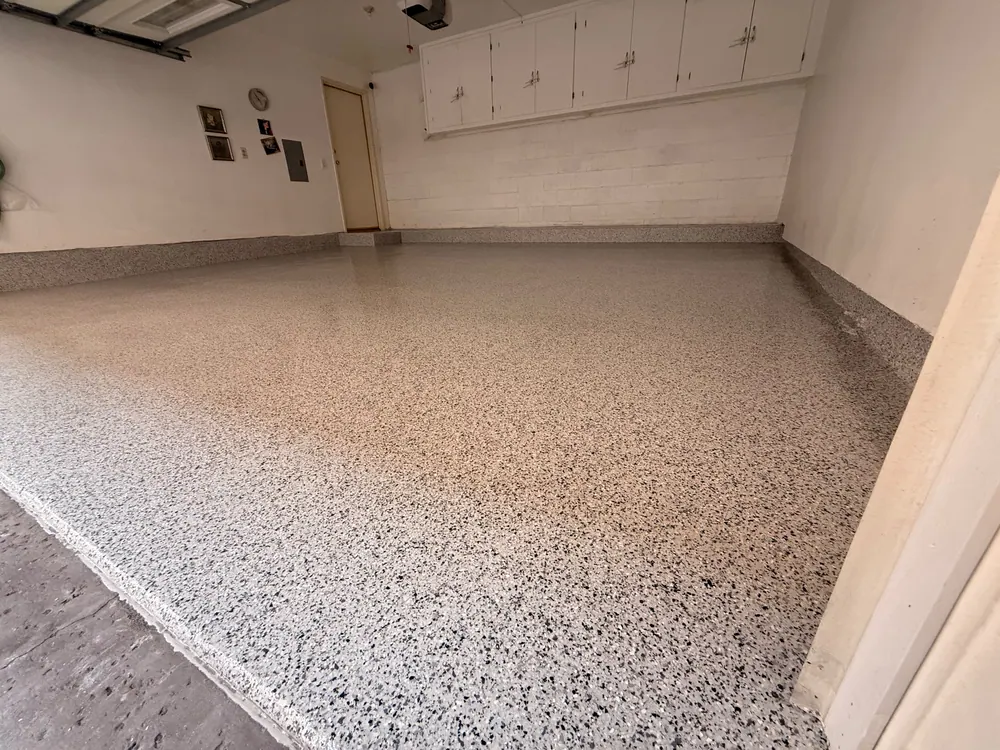 Epoxy garage floor, Chino Hills
Typical two-car garage means up to 400 sq ft. Projects start at $2,600. These are installed prices with grinding and standard crack repair included.
| System | Per sq ft | Typical two-car garage (up to 400 sq ft) | Install time |
|---|---|---|---|
| Flake epoxy | $6.50-$10 per sq ft | $2,600-$4,000 | 1 day |
| Solid color epoxy | $9.50-$11.50 per sq ft | $3,800-$4,600 | 3 days |
| Metallic epoxy | $12.50-$18.50 per sq ft | $5,000-$7,400 | 3-4 days |
| Quartz & sand finish | $9-$16.50 per sq ft | $3,600-$6,600 | 2-3 days |
| Grind and seal | $6.50-$9 per sq ft | $2,600-$3,600 | 1-2 days |
Prices and details reviewed November 2026.
Sizes outside a two-car garage are priced per square foot from the same table. Send your measurements on the contact page and we will call you back.
Tap a photo to see it full size.
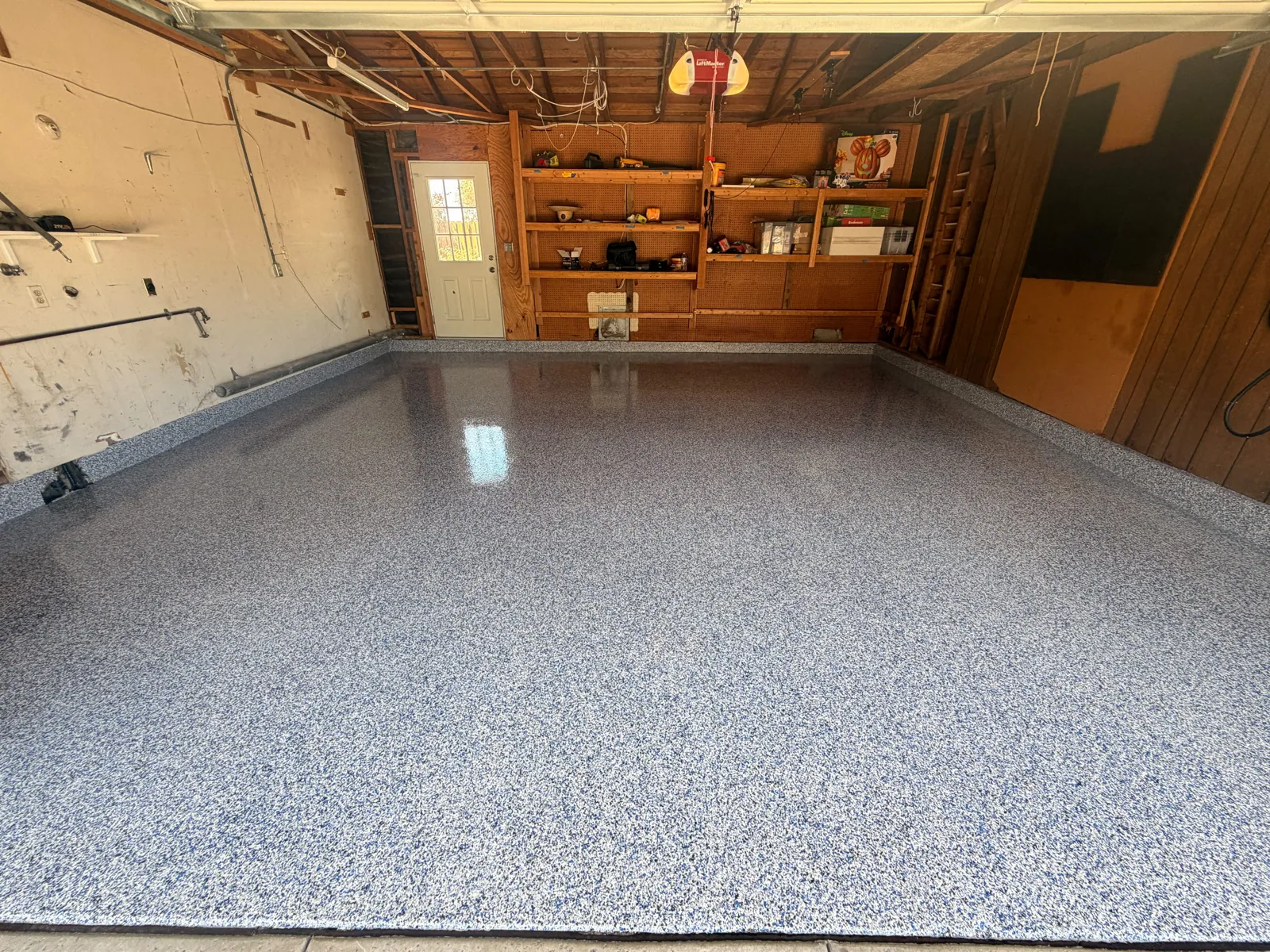
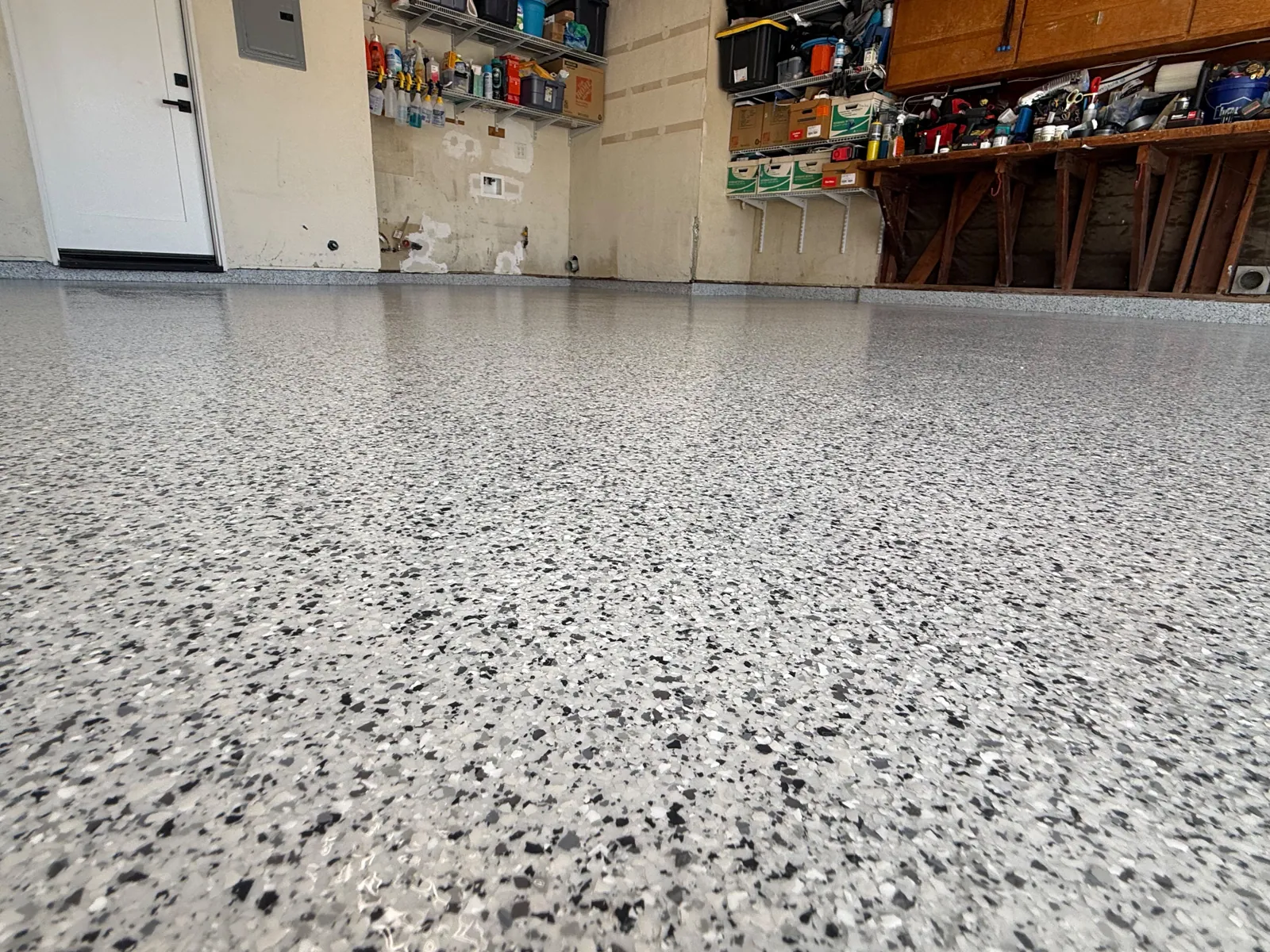
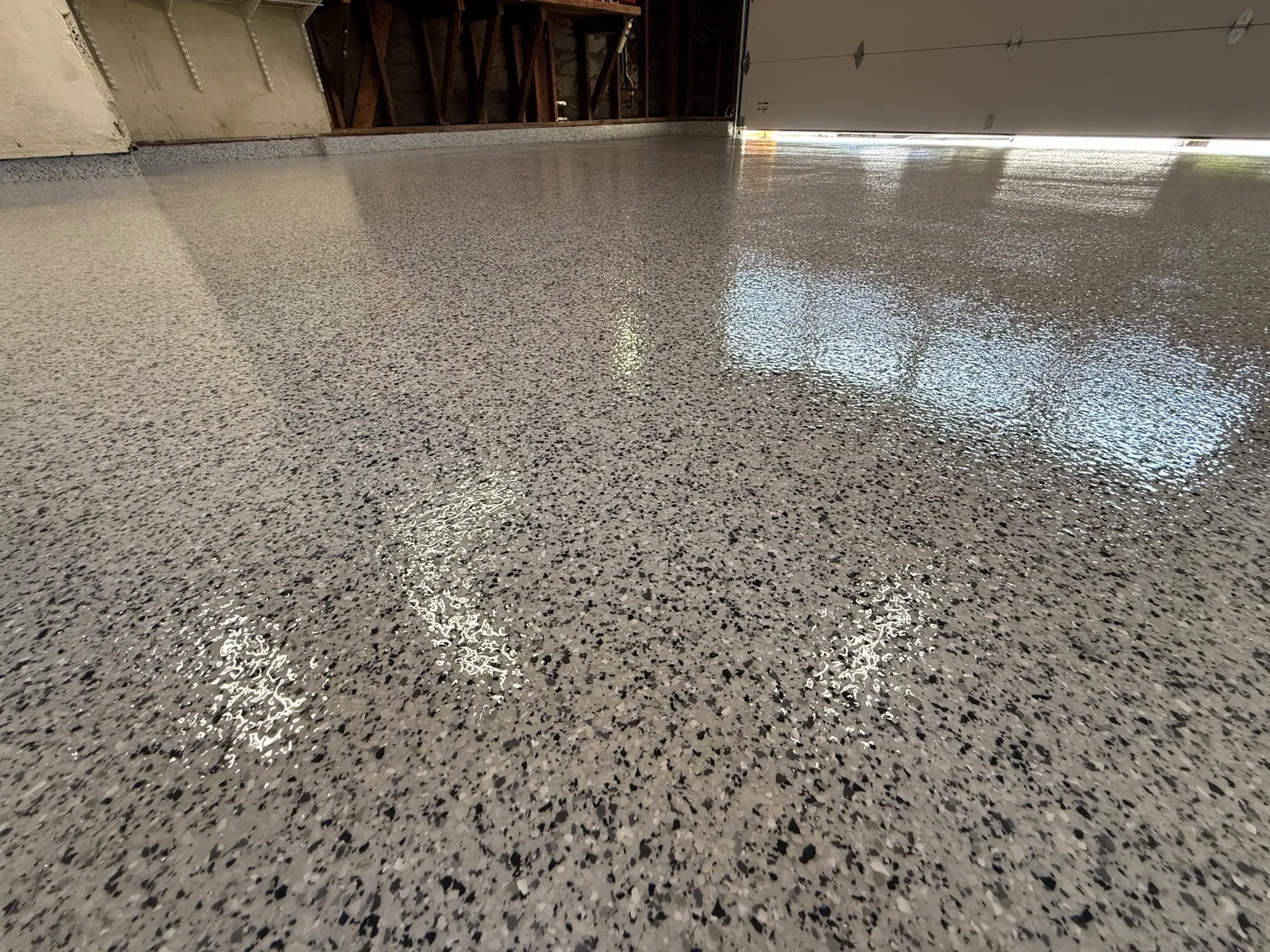
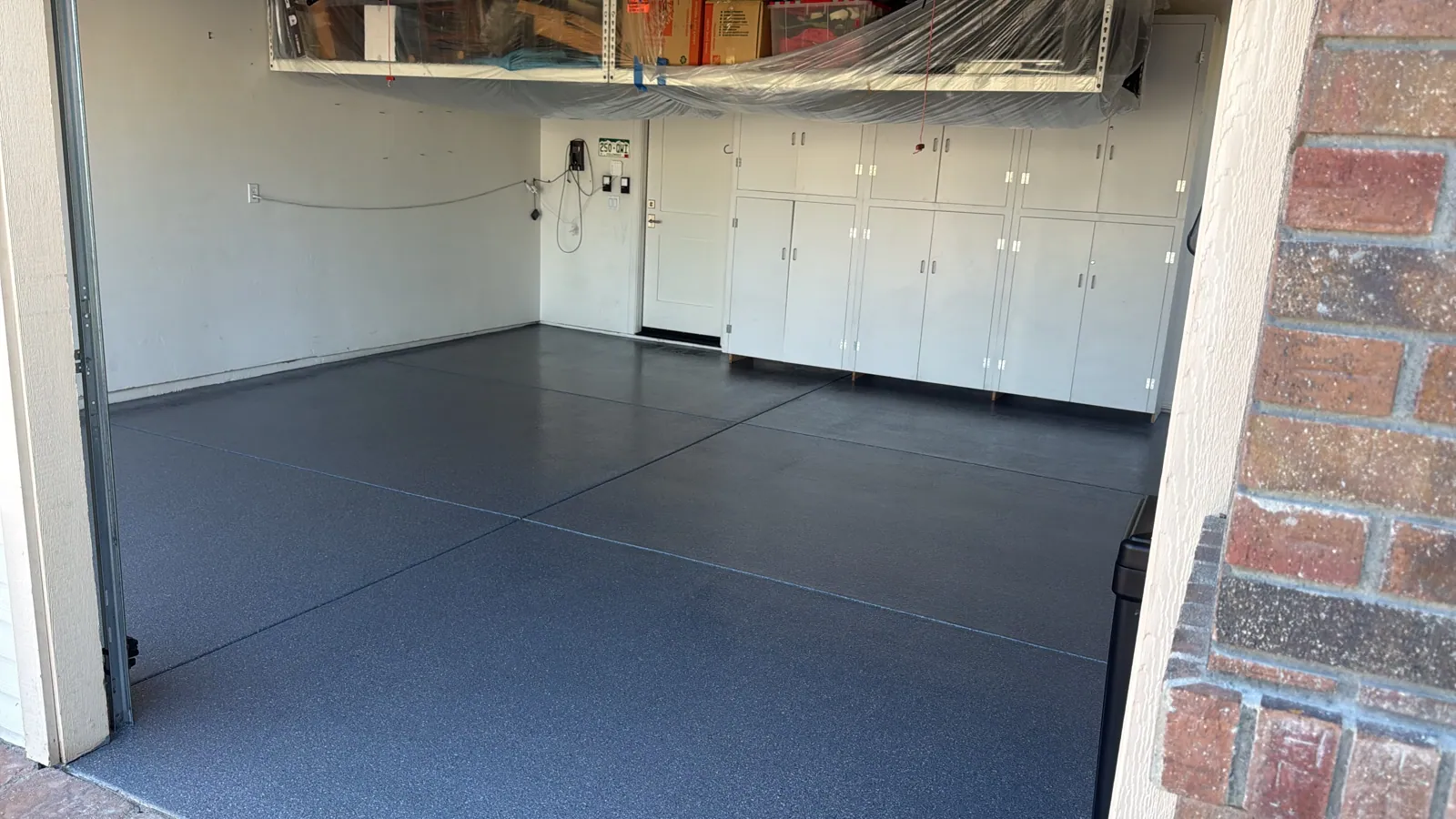
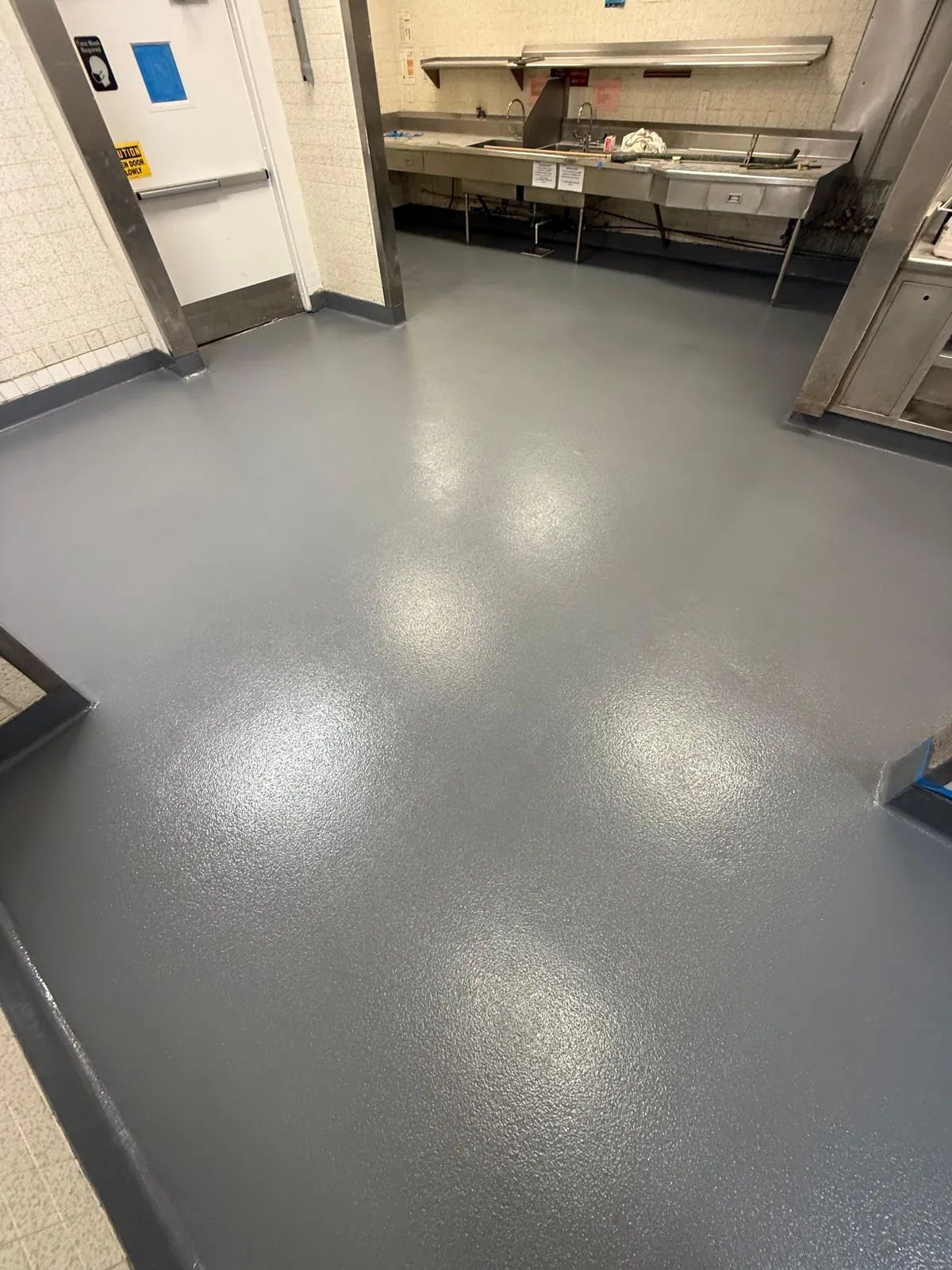
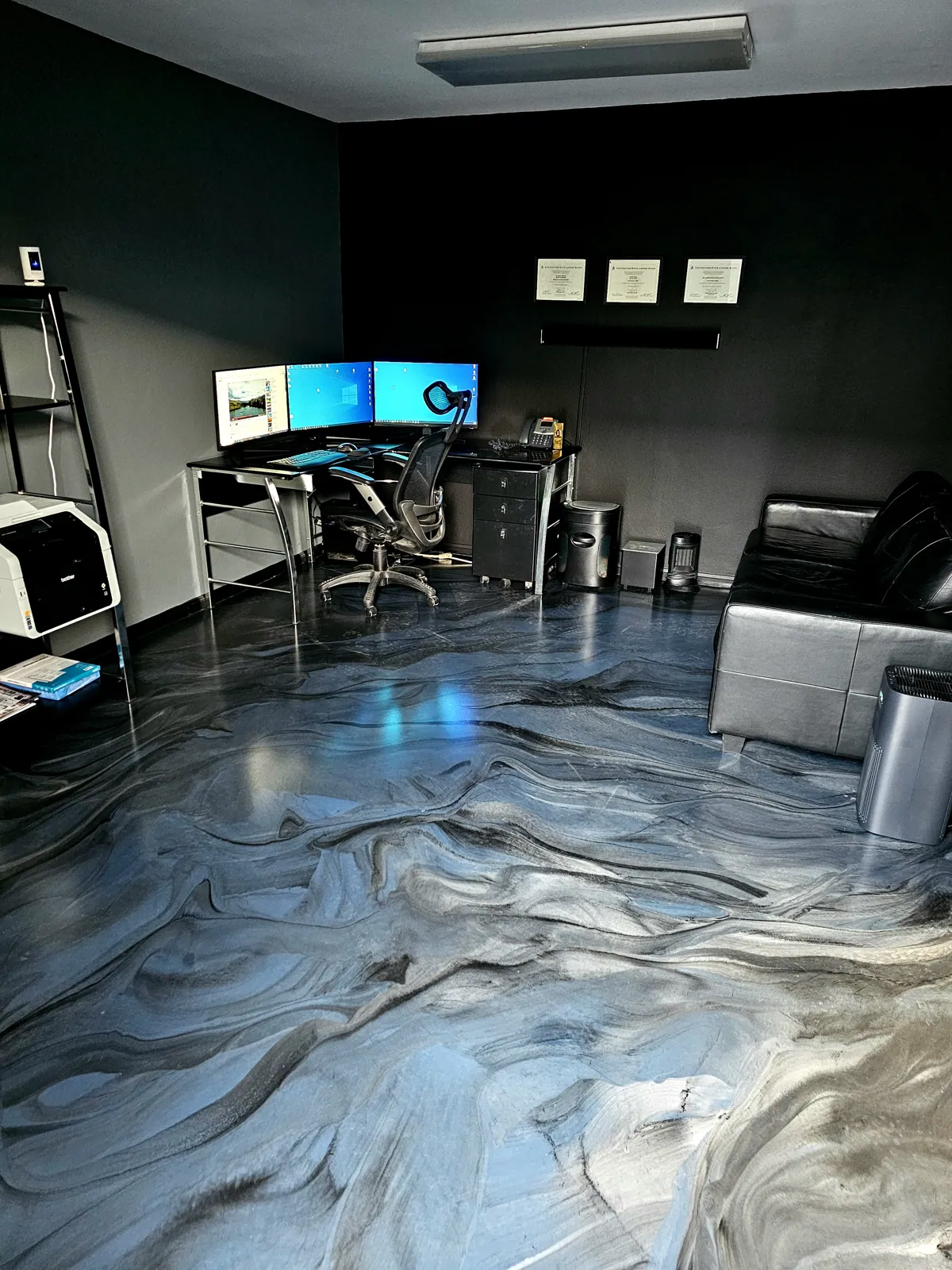
Each system has its own page with prices and photos.
A two-car garage of up to 400 sq ft costs $2,600 to $4,000 with a flake system. Solid color floors cost $3,800-$4,600, and metallic floors $5,000-$7,400. The price includes grinding, standard crack repair, materials and labor, and projects start at $2,600.
You can walk on a flake floor the evening it goes down and park on it after 24 hours. Solid and metallic floors take longer because they cure over 3 to 4 days. We give you the exact timing for your system at the end of the walkthrough.
We diamond grind every garage slab. Acid etching leaves an uneven, weak surface and residue that can hurt adhesion. Grinding cuts to clean concrete with the texture the coating maker specifies, which is the base for our limited lifetime adhesion warranty.
Epoxy is a slower-curing resin that bonds hard to concrete and tolerates some moisture, so we use it as the basecoat. Polyaspartic is a type of polyurea that cures fast, resists UV and handles hot tires, so we use it as the topcoat.
A flake floor has a light texture from the chips, so it grips better than paint. Solid and metallic floors are smoother, and we can add a fine anti-slip additive to the topcoat. Any coated floor gets slick with oil or standing water, the same as tile.
No coating bonds well over old paint. We grind the paint off down to bare concrete first, then repair and coat. Removing heavy old coatings can add time and cost, and we tell you that at the estimate.
Yes, the floor needs to be clear wall to wall. Most people move items to the driveway or a side yard for the day. Shelving bolted to the wall can stay if the legs clear the floor.
Our limited lifetime adhesion warranty covers the bond between the coating and the concrete, which includes peeling under hot tires. Damage from impacts, chemicals or slab movement falls outside it. You get the written terms at the estimate.
We measure, test the concrete for moisture and give you a written price before any work starts. Projects start at $2,600.